
|
Homeland Security Through Innovations in Aerospace
|
| Company News |
06/17/25 GT Aeronautics had the distinct pleasure of hosting Congressional Representative Harriett Hageman and her staff at the GTA facility today for an indepth brief on GTA UAS products as well as the current state of our country's Counter UAS capabilities. Tom Rullman and Tiffine Canepa (Business Development at GTA) provided the brief, focusing mostly on the highly successful development of the Bandito PGLM Counter UAS capabilities from 2009 to 2014 under Navy, Marine Corps, and Army contracts. According to the Department of Defense, a kinetic Counter UAS capability has been an urgent requirement since 2006! Nineteen years later, the Dod has still not acquired or fielded a system - even though the Bandito PGLM clearly demonstrated the capability at the Black Dart Counter UAS Demonstrations from 2009-2014. Consequently, the brief to Representative Hageman also focused on the current and future battlefield - where small, extremely low-cost UAS are being used to destroy multi-million dollar assets - and how our DoD Acquisition process has been completely ineffective in fielding required capabilities in a reasonable amount of time and at an acceptable cost. Representative Hageman was very receptive to the information provided and posted about her visit on Facebook the following day. If you would like to view her Facebook post, please click this link: https://www.facebook.com/share/1GxYeA7p5u/?mibextid=wwXIfr  If you would like more information on the Bandito PGLM or any other GTA UAS products, please contact our main office at (307) 587-5221. 02/19/25 Today GT Aeronautics' President and CEO Tom Rullman, along with Rebekah Burns of the Powell Economic Partnership (PEP), joined radio show host Mack Watson of Big Horn Basin Media in a live radio podcast regarding the economic growth of the Powell Municipal Airport and the City of Powell. The radio podcast, called "Speak Your Peace", was titled "Park County Prosperity" and took place from 0900-1000 local time on the Big Horn Radio Network (96.7 FM and 1400 AM) out of Cody, Wyoming. The show examined economic growth and "generational development", focusing on long-term projects for the City of Powell and Park County that can help shape the financial stability across all age groups, i.e. "generations". GT Aeronautics and the Powell Economic Partnership are playing pivotal roles in the long-term growth of the Powell Municipal Airport as the City of Powell completes the latest 10-Year Master Plan for the future growth of the airport. If you are interested in listening to the podcast to learn more about the planned growth of the Powell Municipal Airport and how GT Aeronautics and the Powell Economic Partnership are working toward that growth, please click on the following link: https://youtu.be/obk6qWZfa64. 01/20/25 WOW!! So if it wasn't enough of a great day to have President Trump once again sworn in to be our President, the day got even greater when GT Aeronautics President's alumni, "The" Ohio State University, won the College Football National Championship game, besting Notre Dame by a score of 34 - 23! It was an extraordinary game that was hard-fought by both teams, with Notre Dame making a big comeback in the 2nd half, but just not enough to beat the Buckeyes! Both teams played well and the good sportsmanship demonstrated on the field by both teams during and after the game should have made America proud. Congratulations to the Ohio State Buckeyes! We are looking forward to next season! 01/20/25 Our United States of America has a long history of historic events, but today is definitely one for the history books! Donald J. Trump was sworn in as the 47th President of the United States today in a ceremony that could only be described as "historic". Thankfully, our nation can now (immediately) begin to recover from the disastrous previous four years and get back to "common sense" with regard to our Constitution, our Nation's laws, our borders, our foriegn policy, and our military. There are many other common sense items that will be addressed and "corrected" and, based on the President's Inaugural Speech, will take place TODAY! So congratulations and God Bless President Trump, Vice President J.D. Vance, their families, and the Trump Administration for keeping the faith for the last four years. It is a historic day in our American history. God Bless the United States of America! 01/13/25 GT Aeronautics was invited to meet with the Powell Middle School Robotics Team today to learn more about their team, the robotics they build, and the fact that the team is headed to Daytona Beach, Florida later this year for the Robotics Nationals. After providing a short brief on the history and products of GT Aeronautics, President and CEO of GT Aeronautics, Tom Rullman, was "briefed" by this team of future engineers on the robotics they have built and how they intend to win when they attend the Robotics Nationals in Daytona Beach this year. Notable takeaways were how intelligent and outgoing these young engineers are and the knowledge that they already have in hardware, software, and systems integration. Needless to say, everyone had a great time learning and we wish this team the best of luck as they head to Daytona Beach this year. Obviously the team (2 adults and six young men and women) could use some "funding help" to offset airline tickets, hotels, etc., so if you are interested in helping out with a donation, please forward your donation to Powell Middle School Robotics Team, Attn: Mr. Leon Miller, Powell, WY 82345. And if you would like to see some photos and short videos of the event, please click on the following link: https://photos.app.goo.gl/N9vVvaSNrPSFTYwz5  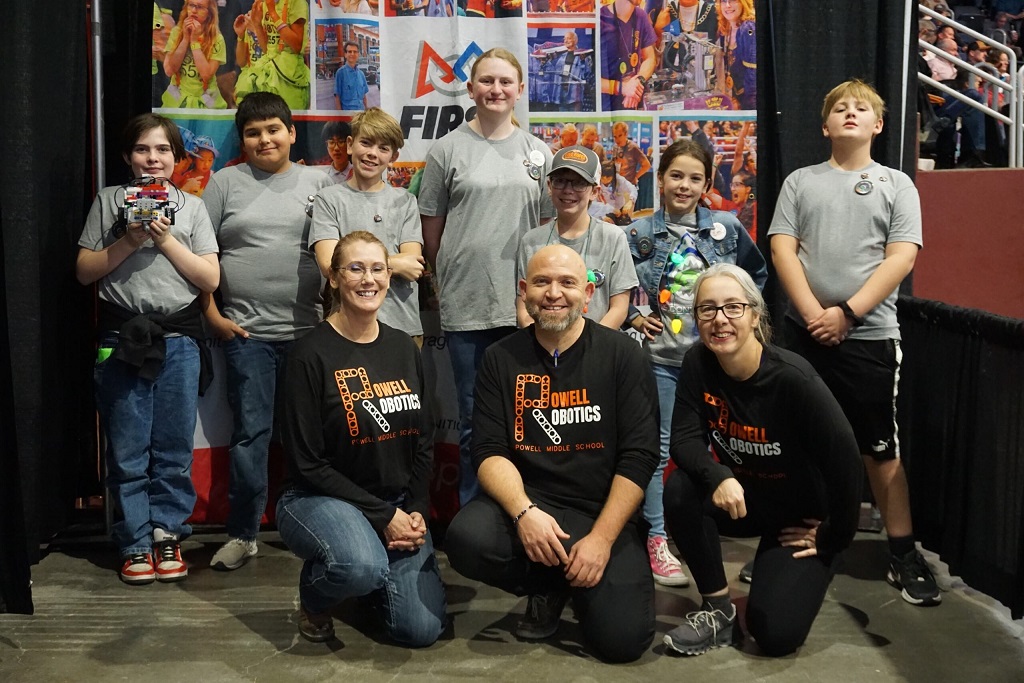 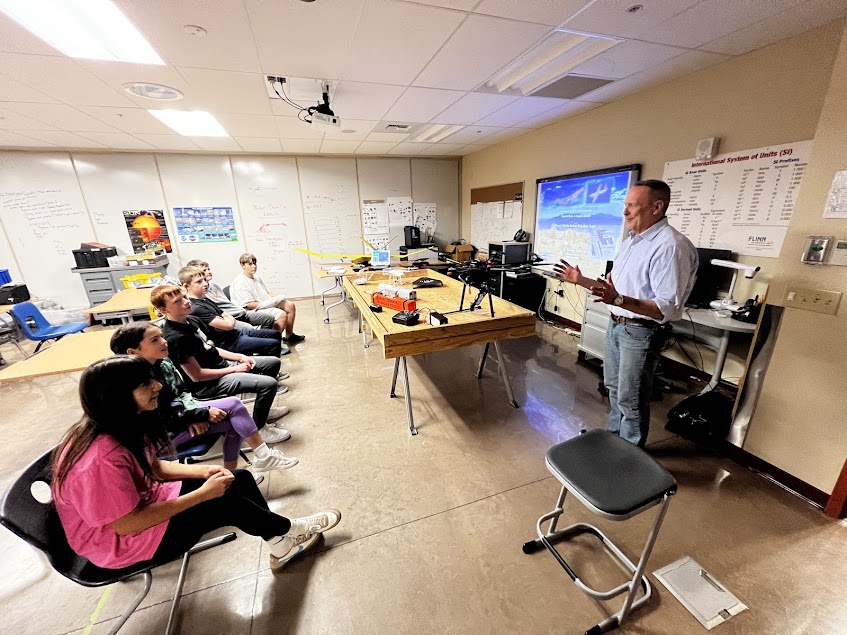 01/01/25 HAPPY NEW YEAR, AMERICA!! 12/25/24 GT Aeronautics would like to wish all Americans a very Merry Christmas! God Bless our troops wherever they may be stationed and God Bless the United States of America! 12/17/24 With all of the "drone" sightings taking place in the eastern United States, it would seem that our Government would be more transparent on who is operating the drones and/or where they are coming from. If the drones are legitimate, then they have Remote ID and the FAA database would be able to determine "who" is operating the drone(s). If they are not broadcasting Remote ID, they either have a waiver or they are operating illegally in National Air Space. Consequently, if the operation is illegal, then action should be taken either by law enforcement, the FAA, or the Department of Defense as the illegal operation of drones (especially near our military bases) should be considered a national security threat. GT Aeronautics would like to remind our Government officials and the Department of Defense that we developed a Counter-UAS weapon system from 2009-2014 (called the Bandito Precision Guided Loitering Munition) and successfully demonstrated its capability to detect and track a 4' wingspan "hostile drone" at 40 kilometers and intercept/engage the hostile drone to within 18 inches at a point 5 kilometers from the Bandito PGLM firing position using radar to guide the Bandito air-air intercept. No other Counter-UAS weapon system has ever demonstrated this long-range C-UAS capability. And all of it was completed on about $400K (yes, only $400,000...not millions). The DoD never purchased the system, but "Counter-UAS" has been a DoD "urgent requirement" since 2006. Yup! Eighteen years of "trying" to field a system. If you would like to watch a short video clip (from 2014) of a Bandito C-UAS mission and intercept of a "hostile UAS", click the following link: BANDITO PGLM 7.7A 080714 BD2014 CLIP 12/04/24 GT Aeronautics and FAA inspectors successfully conducted the renewal of the Special Airworthiness (Experimental) Certification of the GT380 UAS. As took place in 2023, FAA inspectors arrived to the GTA Facility and conducted their inspection of not only the aircraft, but the aircraft operating and technical manuals, logbooks, maintenance records, and other engineering records for the aircraft. With the paperwork side complete, the GTA Flight Crew used the aircraft Flight Checklists to complete a live preflight, engine start, high-power runup, and taxi of the aircraft, followed by shutdown and postflight. When complete, the FAA officials signed off the Special Airworthiness Certification renewal of GT380-001 (N3800G). The certification allows the GT380 to operate jointly with manned aircraft at the Powell Municipal Airport within the confines of the FAA-approved UAS Flight Operations Area. Congrats to the GTA Flight Crew that worked with the GT380 and helped make it all happen. GT Aeronautics also extends its appreciation to the FAA Inspectors that traveled from Scottsdale, Arizona and Casper, Wyoming to conduct the inspection. 11/12/24 As the upcoming renewal of the GT380 RPAS Special Airworthiness Certification with the FAA gets closer (due in early December), the FAA today has granted GT Aeronautics a waiver to operate GT380-001 (N3800G) without broadcasting Remote ID. The waiver permits operation of the GT380 without broadcasting remote identification information for the purposes of research and development (including aeronautical research) and crew training under the aircraft's current Special Airworthiness Certificate, which classifies the GT380-001 as an Experimental aircraft. 11/05/24 Election Day was an extraordinarily happy day today at GT Aeronautics as we all watched the election returns (until 0200 the next morning!!)and saw that President Donald J. Trump would once again "take the reigns" at the White House with J.D. Vance as his Vice President. His presidency cannot come soon enough and Trump's election will allow our country to "dodge a Communist bullet" with the last four years of Joe Biden, Kamala Harris, and their "train-wreck" of an administration that was hell-bent to destroy the very fabric of the United States. God Bless Donald Trump, his family, and his upcoming Administration and God Bless the USA!! (Hey Joe and Kamala....don't let the door hit ya where God split ya!) 08/25/24 As a former Navy Attack Pilot (A-7E Corsair), GT Aeronautic's President/CEO took time off this past weekend to attend "Tailhook 2024" and re-unite with former squadron pilots from Attack Squadron 94 (VA-94), known as the "Mighty Shrikes". This was a 40-year reunion for us "old guys", but as luck would have it, we had the pleasure of connecting with the latest hot-shot F-18 pilots from VFA-94! (Boy, do those guys make us look old!) Needless to say, we had a couple of drinks with these guys and can, with all confidence, say that we are all in good hands! These guys are the best of the best and our Navy's finest! SHWFOTS!! (We'll let you all figure out what that means!! 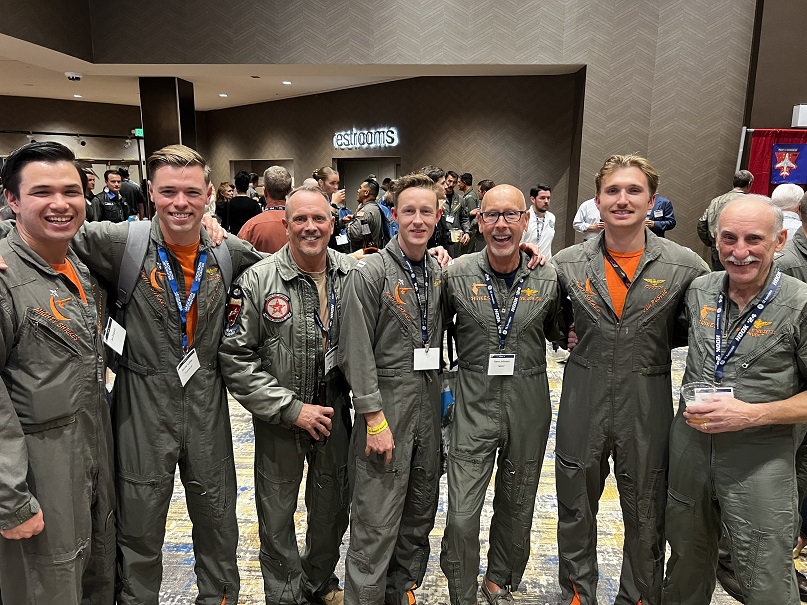 10/19/23 GT Aeronautics achieved a long-awaited milestone today with the successful certification by the FAA of its GT380 UAS. FAA inspectors arrived to the GTA Facility and conducted their inspection of not only the aircraft, but the aircraft operating and technical manuals, logbooks, maintenance records, and other engineering records for the aircraft. With the paperwork side complete, the GTA Flight Crew completed a live preflight and engine start of the aircraft, followed by high-power runup. When complete, the FAA officials signed off the GT380-001 (now N3800G) as its latest certified UAS. The Special Airworthiness Certification allows the GT380 to operate jointly with manned aircraft at the Powell Municipal Airport within the confines of the recently approved UAS Flight Operations Area. A heartfelt "thank you" to the GTA Flight Crew that made it all happen. That Flight Crew also included the Chief Operations Officer, Mr. Gary Skaggs....a really special person that has given his time to GT Aeronautics since July 2007 and has been instrumental in the success of the company. My personal thank you to Gary...you are family to all of us. 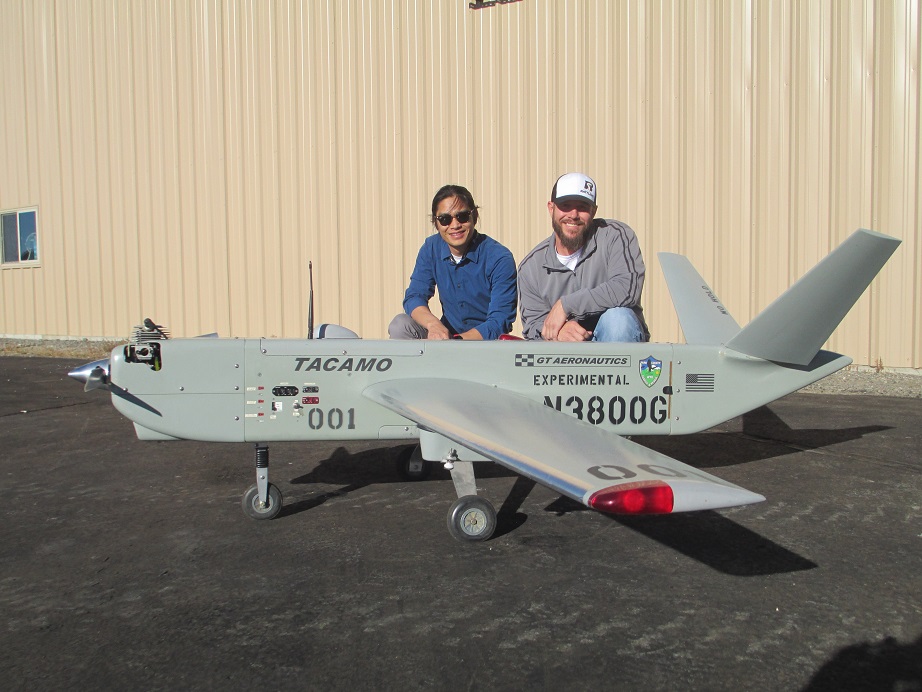 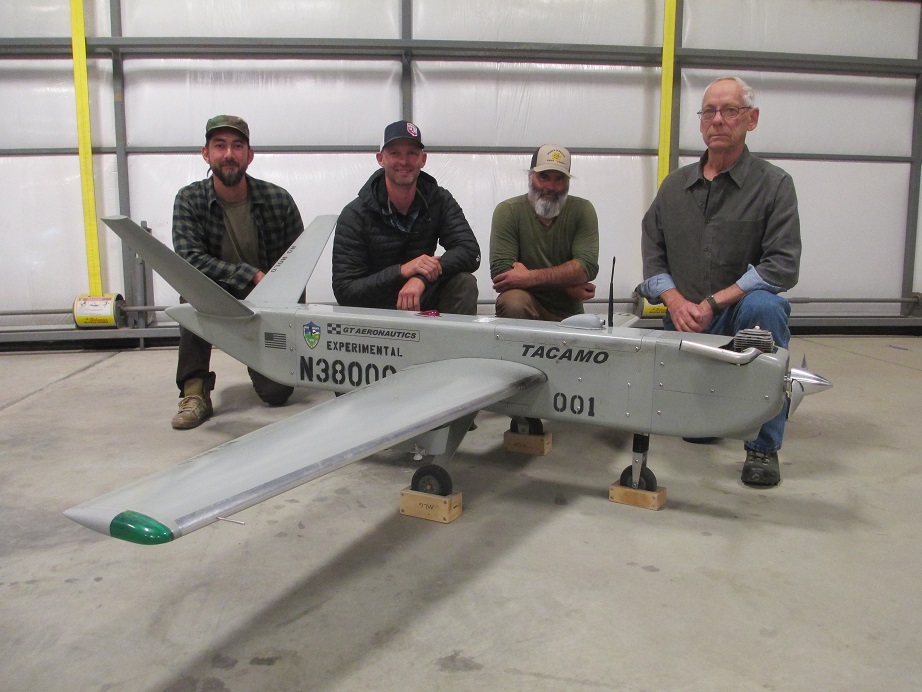 10/18/23 GT Aeronautics successfully integrated an ADS-B system to its Facility Ground Control Station today. The system allows real-time tracking of ADS-B equipped aircraft. Aircraft are displayed in the GCS to the Pilot-In-Command on an upper display known as the "Single Integrated Air Picture" display, or SIAP. With the successful integration, GTA UAS Flight Crews can monitor all ADS-B equipped aircraf within approximately 100 miles of the GCS. This includes the GT380, which is ADS-B equipped as well. The real-time display of aircraft allows GTA to have a sense-and-avoid capability for its UAS - the "avoid" portion being manual flight away from a potential conflict. Ultimately, GTA intends to incorporate an application within both the autopilot and flight management system software that will automatically provide the sense-and-avoid capability in the event a conflict with manned aircraft arises. 09/27/23 GT Aeronautics conducted UAS flight operations today, demonstrating the capabilities of the GT100HL Remotely Piloted Aircraft System for the Park County Weed & Pest organization. The flight was conducted on a ranch in Wapiti, Wyoming and utilized the three cameras onboard the aircraft to obtain video and photographs of land that is known to have an invasive weed called leafy spurge. An official from Park County Weed & Pest was on hand to observe the flight as well as the property owners and other land-owners nearby. Additionally, a Billings, Montana television news crew (Billings KTVQ Channel 2) was there to film the operation and provide a news story on their station. GTA collected the video data and will run the video through various applications that can help identify the exact locations of the invasive weed. The ultimate goal for Park County Weed & Pest is to utilize the 2 hours of flight time the GT100HL can provide to fly over large areas to video the land and determine exact latitude/longitude locations of the leafy spurge so that crews can go to exact locations to eliminate the weed instead of searching for the weed on foot. If you would like to watch the news story that aired on 03 October 2023, you may visit this link: https://www.ktvq.com/news/local-news/drone-technology-to-help-spot-noxious-weeds-near-yellowstone-national-park or search their website at www.ktvq.com 09/24/23 The GT100HL successfully demonstrated a "point-launch" capability today, firing from the GTA Ground Launch Catapult (GLC) system that was used extensively for the Bandito PGLM throughout its DoD work as a Counter UAS weapon system. The GLC, mounted on top of the Mobile Ground Control Station, was modified with a new aircraft cradle for the GT100HL and catapult tension was increased in the bungee system to permit successful launch of the 13 lb aircraft. Having the GLC point-launch capability allows GT100HL flight crews to avoid hand-launching the aircraft as well as eliminating the need for setting up the bungee-launch system that has been used in the past. The GLC provides a consistent launch for the aircraft, thus avoiding human-induced issues when hand-launching or bungee-launching the aircraft. 07/31/23 GT Aeronautics achieved a milestone today with the approval of a UAS Flight Operations Area at the Powell Municipal Airport as part of a Special Airworthiness Certification effort for the GT380 RPAS. The Certificate of Authorization, or COA, was approved by the FAA and allows GT Aeronautics to operate the GT380 in the approved area with manned aircraft. The approved UAS Flight Operations Area is a square box area (3 miles x 3 miles) that lies just west of the main runway at Powell Municipal Airport. The area permits UAS operations up to 8000' MSL (3000' AGL). The COA is part of the Special Airworthiness Certification effort underway at this time for the GT380 UAS, which recently received its N-Number (N3800G) from the FAA. The N-Number is required because the GT380 is too large to meet FAA Part 107 specifications for a UAS. GT Aeronautics has submitted all paperwork to the FAA for the Special Airworthiness Certification and is awaiting the scheduling of a Safety Evaluation in addition to a final airworthiness inspection of the aircraft by FAA officials. The FAA has indicated that the certification effort should be complete no later than November 2023. 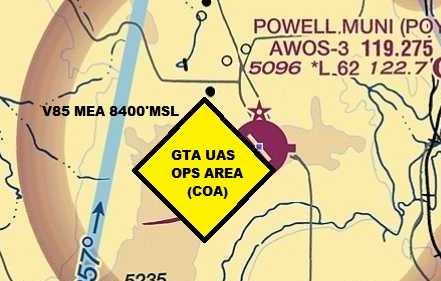 04/05/23 GT Aeronautics attended the Northwest College Career Fair today, exhibiting a GT100HL RPAS, a Bandito PGLM, and a completed Avionics Tray from a GT380 RPAS while introducing high school and college students to the company and the various jobs available at an aerospace/defense company. As expected, the aircraft garnered a lot of attention and allowed students to learn about the many facets involved in the manufacture of Unmanned Aircraft Systems, including engineering, composites, electronics, avionics, wiring, and powerplants to name a few. Students from all over the State of Wyoming attended, with many requesting GTA facility visits, briefs, and job shadows. In a state where oil, natural gas, and coal are the mainstays of employment for many, the Career Fair provided the opportunity for GT Aeronautics to showcase "aerospace technology" as a new, alternative means of employment in the State of Wyoming. GT Aeronautics is currently the only manufacturer of fixed wing UAS/RPAS in Wyoming. 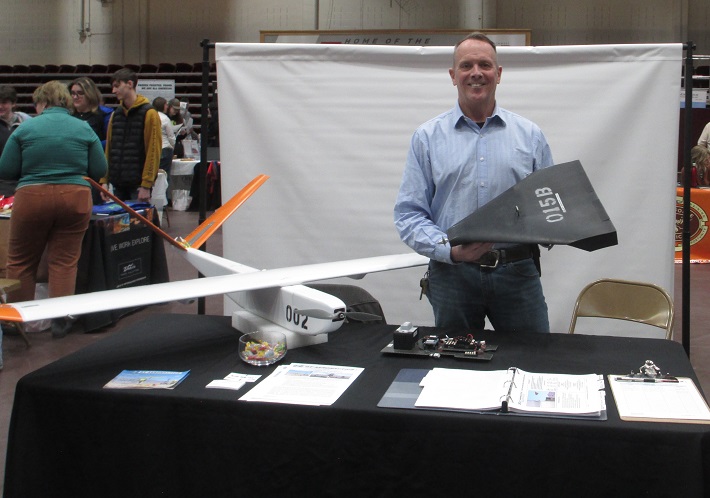 02/28/23 GT Aeronautics was featured in an article at the Cowboy State Daily today. The article provided an indepth background on the company and its history of UAS/RPAS development since 2003, with specific focus on the Counter UAS mission and the Bandito Precision Guided Loitering Munition (PGLM). To review the article, please click on the following link: https://cowboystatedaily.com/2023/03/01/engineer-in-powell-develops-military-drones-that-can-blow-up-air-and-ground-targets/ 01/20/23 GT Aeronautics was featured in an article at the Cowboy State Daily today regarding the increasing threat that "drones" (UAS/RPAS) are making to power substations and other critical infrastructure. The article focused on the use of UAS/RPAS to conduct destructive missions, with a portion of the article including an interview with Tom Rullman, President/CEO of GT Aeronautics, discussing the UAS/RPAS products that GT Aeronautics has developed over the past 20 years, the weaponization of those products, and how effective those products are at completing their missions. GT Aeronautics actually got its start from a briefing to the Air Force that Rullman conducted at the Pentagon in 2007, which made the Defense Department keenly aware of the 200mph Bandito PGLM and its capabilities to effect prosecution of ground and airborne hostile targets. The article is available at the following link: https://cowboystatedaily.com/2023/02/08/drones-a-very-real-threat-to-power-substations-and-other-critical-infrastructure/ 01/01/23 Happy New Year!! As we start a new year, we look forward to 2023 as a year of improvement to 2022! (Always gotta do better than last time, right??) 12/25/22 GT Aeronautics would like to wish everyone a very, Merry Christmas and once again take a moment to say a special "Thank You" to all of our troops that protect our rights and freedoms every day - even on Christmas day! Each and every one of these folks deserve our gratitude for their sacrifice and committment to our country and its Constitution. Troops, GTA hopes that wherever you are this Christmas and always, you stay safe and get back home to spend this special day with your family and friends. But if you are deployed or simply cannot be home, please know that we support you always and wish you the very best! On this day, it is important for all of us to remember the true meaning of Christmas and why we celebrate this incredible day - the birth of Jesus, our Savior. God Bless our troops, our patriots, and our United States of America! 11/25/22 With the Thanksgiving holiday complete, GT Aeronautics used Black Friday not to shop for Christmas...but to conduct the Live Fire Ground Test of the 35mm Forward-Firing rockets from its TACAMO Remotely Piloted Aircraft System (RPAS). Outfitted with two Rocket Pods and four 35mm rockets in each Rocket Pod, the TACAMO RPAS successfully connected to the GTA Facility Ground Control Station from an undisclosed location near the Powell Municipal Airport and then successfully fired all eight rockets (in pairs) using the Weapons Management System Interface (WMSI) to select, arm, and fire the rockets. The Live Fire Ground Test was conducted with the TACAMO RPAS captively mounted to an angled platform that set the aircraft (and the Rocket Pods) to approximately a 25 degree elevation. All eight of the inert 35mm Folding-Fin Rockets exited the Rocket Pod "like homesick angels", successfully deploying their folding fins and maintaining beautiful trajectories. When all of the rockets were fired, the test concluded with the jettison of both Rocket Pods from the TACAMO RPAS (second photo below) to verify the operation of the Stores Release Units (SRUs) and their ability to jettison stores/weapons from the aircraft that weigh up to 10 lbs. Company officials and the workers that have worked tirelessly on this capability over the last two years were elated - champaigne and cigars were the order of the day after the test!! The test is part of GT Aeronautic's Cooperative Research and Development Agreement (CRADA) with the Naval Surface Warfare Center Crane Division for Armed Unmanned Systems, which includes Close-Range Armed RPAS/UAS. To view a short video of the rocket fire portion of the test, click the following link: GT35MM Rocket Fire #1 & #6. To watch the jettison of the Rocket Pods, click this link: SRU Rocket Pod Jettison. 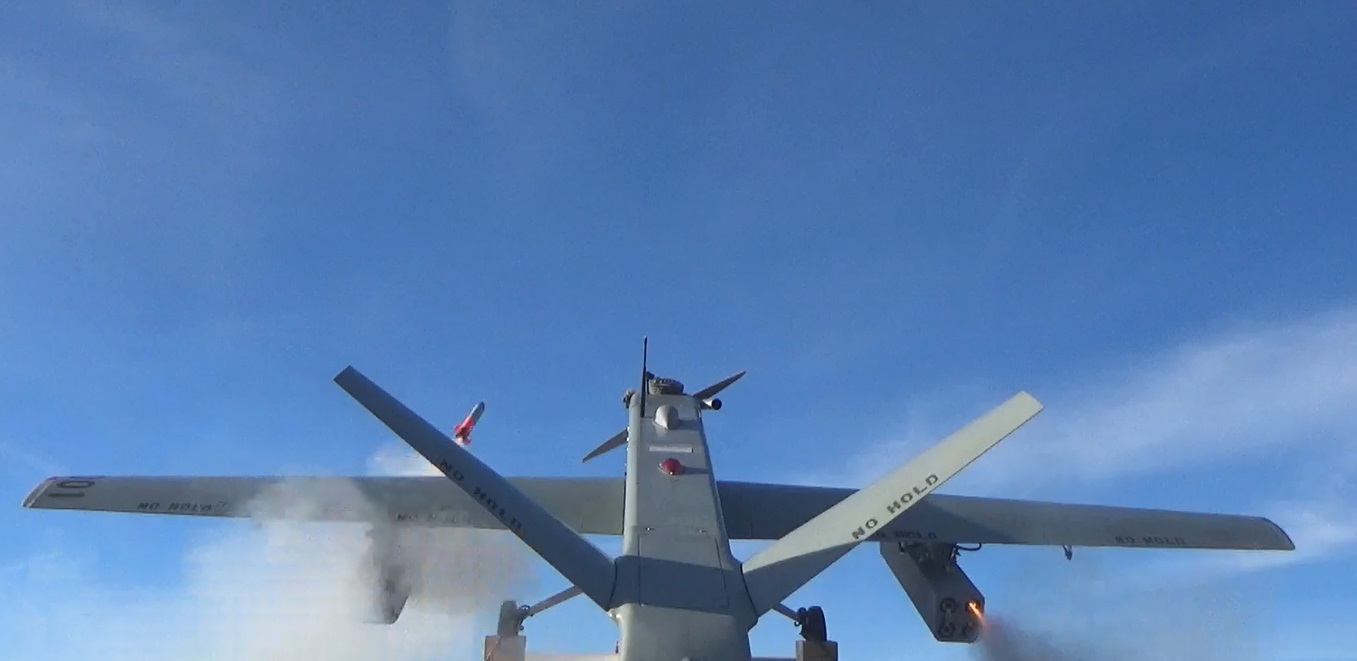 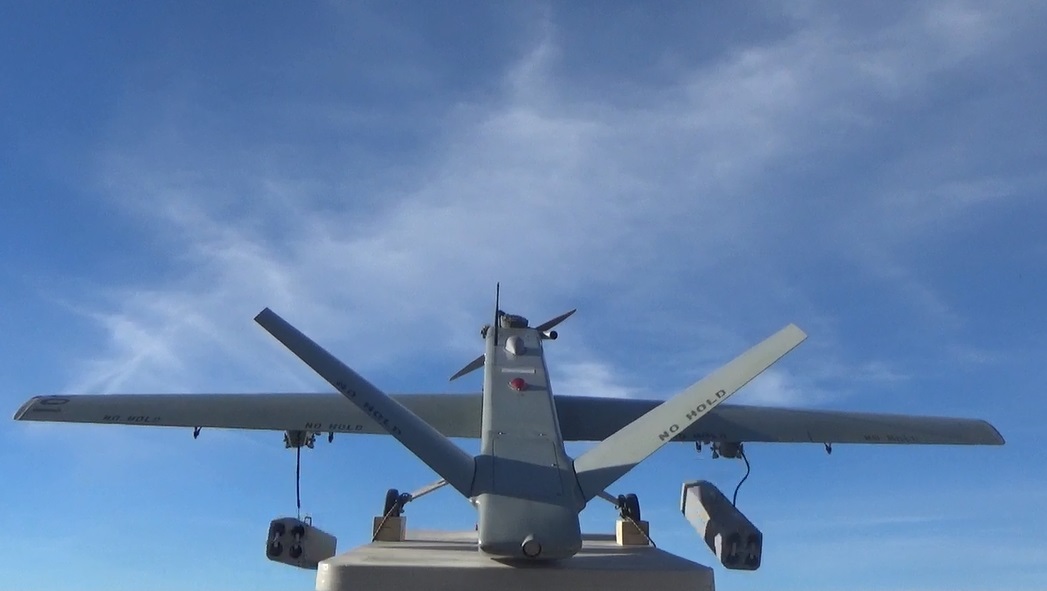 (The Rocket Pod Cables have not yet detached from the pods) 11/24/22 GT Aeronautics would like to wish everyone a Happy Thanksgiving this year and pass on a special "Thank You" to all of our military troops for their patriotism and dedication to our country. While some of our politicians seem to do everything in their power to undermine and ruin our great United States of America, it is clear that our troops and the majority of our citizens are still awesome patriots and true to our republic and its Constitution. God Bless America! 08/12/22 GT Aeronautics completed a milestone test today with successful testing of its Weapons Management System Interface (WMSI) - the electronic interface that allows the flight crew of an unmanned aircraf to select, arm, and fire weapons. The WMSI is being developed in conjunction with GTA's Cooperative Research and Development Agreement (CRADA) with the Naval Surface Warfare Center Crane Division for 35mm Forward-Firing rockets from an unmanned aircraft. The WMSI is an application that runs parallel to the UAS Flight Management software, providing a visual display of the weapons that are loaded on the wing stations of the aircraft in addition to the Stores Release Units (SRU) that interface to the weapon. The testing today consisted of "mock" firing tests through the Command and Control (C2) link to the aircraft. In the test, two 4-rocket rocket pods were loaded to the TACAMO 001 aircraft - the GTA testbed for weapons testing. Each rocket pod has four 35mm rockets that can be selected individually or in any combination through the WMSI. Once selected, the rockets can be "ARMED" for firing by selecting the MASTER ARM button on the WMSI display. Once armed, the operator need only select the "FIRE" button on the WMSI display and the selected rockets fire. The testing did not utilize live rockets at this time, but did utilize the high-voltage relay board internal to the aircraft that is necessary for firing the rockets. The testing also included selection and activation of the SRUs (either both or individually) to jettison one or both rocket pods. (The requirement to jettision a rocket pod must be available for abnormal situations such as a rocket misfire, hung-fire, etc.) The next scheduled test will include live ground firing of the 35mm rockets from the aircraft and will take place in the 3rd quarter of 2022. 07/04/22 Happy Independence Day! As always, GT Aeronautics would like to wish all Americans a happy Independence Day and remind all Americans to maintain a special focus on the members of our Armed Forces...the United States Army, Navy, Marine Corps, Air Force, Coast Guard, and Space Force. It is our Armed Services that guard and protect our precious freedoms so that we can so easily live and prosper in the greatest country of the world. While we celebrate and enjoy this holiday in the United States, we should always remember that "freedom is not free"...the freedoms that we enjoy are bought and paid for with the blood of our service members...with some paying the ultimate price. God bless our service members and God bless the United States of America! 06/25-26/22 This weekend GT Aeronautics' President/CEO and his wife both competed in the Heart Mountain Challenge, a long-range shooting match and a very worthwhile fundraiser for the Special Operations Warrior Foundation. In addition to participating in the shooting competition, GTA also once again hosted the participation of two Scout Sniper Marines (one active and one former). The active USMC Scout Sniper is based at Camp LeJeune, North Carolina and the former Scout Sniper currently lives in Michigan. In addition to the USMC Scout Snipers, GTA's "squad" this year also included three members of the Park County Search & Rescue (PCSAR) organization headquartered in Cody, Wyoming. (See photo below) The Heart Mountain Challenge event was attended by 115 shooters this year - and increase of over 25 shooters. Entry registration fees support the Special Operations Warrior Foundation, which provides complete education funding to the children of fallen warriors. This year the host of the Heart Mountain Challenge also provided a fund-raising dinner to raise additional money for the Special Operations Warrior Foundation,with Cole Hauser - the actor who plays "Rip" in the television series Yellowstone - being the dinner's guest of honor as well as the Grand Marshall of the Cody Fourth of July parade this year. The annual event is becoming more popular every year in Cody and is an exception opportunity to perform long-range shooting in a mountainous environment.
The Heart Mountain Challenge is a premiere long range shooting competition that is held on the iconic and historic Heart Mountain just north of Cody, Wyoming, on over four square miles of private, mountainous and scenic land. Top marksmen from all across the country, including former Special Operations Forces (Army, Navy, Air Force and Marine Corps), military members and civilians, gather to compete in a variety of assorted difficult timed target shooting, with selected target distances up to 2,000 yards away, at elevations of over 7,000 MSL. You can learn more about this prestigious shooting event by visiting www.specialops.org/heartmountain The Special Operations Warrior Foundation's commitment is to ensure every child of a fallen Special Operations Warrior receives a college education, including children of ALL Medal of Honor recipients as well. This year the Heart Mountain Challenge generated over $70,000 for the Special Operations Warrior Foundation. To learn more about the Special Operations Warrior Foundation or to donate, please visit www.specialops.org 06/22/22 Today, GT Aeronautics successfully completed the first live-fire test of a 35mm folding-fin rocket from a 4-rocket rocket pod. The rocket pods, under development for the Naval Surface Warfare Center Crane Division, each carry a total of four (4) 35mm folding-fin rockets. The live-fire test today was the first in a series of live-fire tests of the rockets and rocket pods that will take place throughout 2022 and 2023 and was performed to evaluate 1) the ability of the 35mm rocket to successfully exit the rocket pod, 2) the ability of the rocket "folding-fin" mechanism to properly deploy after the rocket leaves the rocket pod, and 3) the flight performance of the 35mm rocket itself based on center of gravity, motor performance, and trajectory. The test was completed with the rocket pod mounted vertically (vice horizontally as on the aircraf) to better evaluate rocket motor performance with predicted performance and also to facilitate recovery of the rocket. The test was an absolute success as the 35mm rocket left the rocket pod like a homesick angel, deploying its folding-fins correctly, and achieving its predicted target altitude. You can watch a short slow-motion video of the test by clicking this link: 35mm Rocket Test 062222-003
05/10/22 As part of the Cooperative Research and Development Agreement (CRADA) with the Naval Surface Warfare Center Crane Division (NSWCCD) contract, GT Aeronautics completed the first ground taxi test of TACAMO 001 with both 35mm rocket pods loaded on wing stations. Each rocket pod interfaces with its respective wing station via a Stores Release Unit (SRU), developed by GTA in 2012 for airborne weapons release from an unmanned aircraft. The rocket pods were "captive" for this taxi test and none of the eight rockets were able to fire. The test was conducted to evaluate the SRU interface and the SRU store stabilizer pads to ensure the rocket pods and rockets were secure during the entire taxi test and that engine vibrations did not cause any faults in the rocket pod or aircraft wiring. The ground taxi test also evaluated the facility Ground Control Station with respect to the Command and Control (C2) link to the aircraft as well as the Forward Look Camera (FLC) video link. Full power engine run-ups and engine idle tests were also performed to evaluate engine performace prior to conducting flight testing of the aircraft with the rocket pods. The testing (both ground and flight) will continue throughout 2022 as the company moves toward a formal demonstration (to NSWCCD) of 35mm Forward-Firing Rockets from the TACAMO UAS in 2023. To watch a short portion of the taxi test, please click here: TACAMO 001 Taxi Test 04/30/22 GT Aeronautics completed a milestone achievement today on a Naval Surface Warfare Center (Crane Division) contract that was awarded in 2019 for "Armed Unmanned Aircraft Systems". The contract, also known as "Small UAS Gunship", called for development of forward-firing rockets for carriage and deployment from a tactical unmanned aircraft system. GTA's TACAMO UAS/RPAS was deemed the only aircraft capable of deploying this type of ordnance because of GTA's past development of weapons for UAS and its Stores Release Unit (SRU) that is capable of carrying up to 25lbs of payload. Two rocket pods, carrying a total of eight 37mm forward-firing rockets, were completed and are now ready for ground and flight testing. The unguided rockets are approximately 24 inches long and utilize "folding fins" that spring out when the rocket exits the rocket pod tube. Firing interface applications for the flight crews are also being completed, as is the aircraft wiring harnesses that permit selection, arming, and firing of individual or multiple rockets. Ground testing of the rockets/rocket pods will take place in May/June with live fire testing sometime in the 3rd quarter of 2022. GT Aeronautics has the only UAS/RPAS that are capable of carrying such ordnance and has designed all of its larger aircraft for tactical armed capabilities. TACAMO 002 (a defense version of the GT380) will be the first aircraft to carry the rocket pods in flight as well as the first UAS to fire forward-firing rockets in flight at ground targets.
04/29/22 Today GT Aeronautics hosted staff members from Wyoming Senator Cynthia Lummis' office, providing a tour of the facility and a brief on unmanned aircraft systems and their future in the aerospace and defense industry. The brief focused on GTA's UAS/RPAS products and their capabilities for U.S. Border Patrol, Department of Defense, and commercial operations as well as their current uses with Park County Search & Rescue and Park County Weed & Pest. The facility tour included all four assembly lines for the GTA UAS aircraft (GT1500, GT380, GT100HL, and Bandito PGLM) as well as the Engineering Office, Mission Planning, Flight Training, the Ground Control Stations and UAS flight operations from the Powell Municipal Airport. Staffers were also provided a sneak preview of GTA's recent milestone achievement on a DoD contract (awarded in 2019) - the completion of 37mm rocket pods for forward-firing rockets. Each rocket pod each carries four 37mm rockets (currently unguided). The rocket pods are carried on either the Bandit UAS or TACAMO UAS, which utilize wing hard points for ordnance. 04/06/22 GT Aeronautics set up a booth today at the Northwest College Career Fair. The event was heavily attended by both employers and job seekers. Over 70 booths were set up by local area businesses/employers and approximately 500-700 job seekers visited booths during the all-day affair. GT Aeronautics had one of two Park County Search and Rescue (PCSAR) GT100HLs on display along with a Bandito Precision Guided Loitering Munition. Attendance at the Career Fair resulted in multiple "job shadows" at GTA, giving potential job seekers a chance to work at the GTA UAS manufacturing facility and determine if a career in aerospace is in their future. 01/24/22 The University of Wyoming College of Education has distributed a Press Release regarding the Wyoming STEAM Big Horn Basin Drone Expo & Challenge Series that will take place at the Powell High School on Saturday, January 29, 2022 from 9:00am to 3:00pm. The event is open to all K-12 and college level students. For more information and to register for the event, please visit www.tinyurl.com/4a76amm7. The event schedule may be viewed/printed here: Big Horn Basin Drone Festival Event Schedule. 01/22/22 GT Aeronautics participated today in a Park County Search & Rescue (PCSAR) training exercise, using both of its PCSAR fixed wing GT100HL UAS/RPAS to simulate an airborne communications repeater for personnel on the ground. The flight was conducted in the mountains at an elevation of 6600 feet, with the aircraft orbiting at 7000' MSL. The aircraft was launched using GTA's new Bungee Launch System so that operators can safely launch the 11 pound aircraft with confidence. To watch a short video of a portion of the 60 minute flight, click this link: GT100HL 004 SAR OPS. The GT100HL aircraft (004 & 005) are FAA Part 107-ready aircraft and can be flown under Part 107 rules at any time. The GT100HL provides Park County SAR with fixed wing UAS/RPAS capable of 2 hours of flight time and the ability to use video cameras to search for and locate lost hikers or persons that may require assistance in Wyoming's austere environments. The two aircraft are painted identical to PCSAR's current manned aircraft - bright yellow with Search/Rescue logos on the bottom of the wing and sides of the fuselage.
01/20/22 Today the Powell Tribune ran the first ad for the Big Horn Basin STEAM Drone Challenge Cup in their newspaper. The Powell Tribune, courtesy of Kevin Killough, is a sponsor for the event. The ad may be viewed on page 7 of the January 20, 2022 edition of the newspaper by visiting the Powell Tribune website at www.powelltribune.com or you may view/print the ad directly by clicking here: DroneExpoJan2022 01/13/22 GT Aeronautics will participate in the upcomingBig Horn Basin STEAM Drone Challenge Cup scheduled to take place on 29 January 2022 at the Powell High School. The event includes racing, precision flying, virtual racing computer coding, film making, and knowledge testing events and is part of the larger Wyoming STEAM Drone Flight Expo & Challenge Series that takes throughout the year at a number of locations in Wyoming. K-12 and college students may compete in any/all of the events and the event is open to spectators. GT Aeronautics will provide UAS/RPAS capability briefings, UAS/RPAS aircraft displays and demonstrations at this event as well as at other Wyoming STEAM Drone Challenge Series events to enhance public awareness of the capabilities that unmanned aircraft systems can offer the defense and commercial aerospace industry. Currently, GT Aeronautics has provided Park County Search & Rescue with two GT100HL fixed wing UAS for their SAR operations and is in discussions with federal and state legislators to provide UAS flight services to the State of Wyoming as well as Border Patrol in the southwestern U.S. For more information andregistration for the Big Horn Basin STEAM Drone Challenge Cup, please visit their website at www.drone-challenges.org or print this flyer: Big Horn Basin Drone Flyer. More information regarding the Wyoming STEAM Drone Flight Expo & Challenge Series may be found at dronechallenges.wordpress.com/calendar or print their flyer: 2022 WY Drone Festival Flyer. 10/15/21 GT Aeronautics recently placed an ad in Unmanned Systems Technology" magazine for its GT100HL UAS/RPAS. The ad was featured in the OCT/NOV issue of the magazine and is a great spotlight for the capabilities of the GT100HL system. The half-page ad can be found at the top of page 33 if you subscribe to the magazine. But if you would like to see the ad, you can visit Unmanned Systems Technology website and view the magazine (and ad) online at this link: www.ust-media.com/ust-magazine/UST040/32 Alternatively, you can view the ad directly here: AD PHOTO 3H.jpg 07/15/21 An editorial today in the Powell Tribune (see link below) referenced the difficulties with the FAA regulatory process for unmanned aircraft systems (UAS) that companies like GT Aeronautics face as they try to get their UAS products to work in the commercial aviation sector. While most of the public understands the term "drone", they may not be aware of the differences between "toy manufacturers" and professional UAS/RPAS manufacturers like GT Aeronautics. The toy drone industry was addressed by the FAA over the last few years with a blanket policy that did not take into consideration the professional operations of companies (like GTA) that have worked for decades with the Department of Defense (DoD) to create unmanned aircraft systems that can not only operate safely within military test ranges, but also operate safely within our National Airspace System (NAS). The blanket regulations imposed by the FAA are intended to heavily restrict UAS operations of non-certified, non-pilot, non-professional UAS operators...i.e. those operations that are typically "toys". But at the same time, the blanket regulations also heavily restrict professional UAS operations that can actually provide valuable services to the public. Indeed, there are waivers available from the FAA to alleviate some of the burdensome restrictions to professional UAS operations, but the iterative waiver process with the FAA is burdensome in itself and can take months to successfully obtain even a single waiver. Not only that, it is really only the professional UAS operators that must endure the FAA regulatory processes that are in place...because many (not all, okay?) other UAS operators simply ignore the regulations because there simply is no enforcement capability by the FAA at all for the regulations that they have created. (This is why you may see a drone flying over your house/property without your permission.) In the meantime, GTA has unmanned aircraft systems that were previously approved by the DoD and can fly for hours at distances up to 100 miles...able to search for stranded/lost hikers on behalf of Park County Search & Rescue, or provide aerial surveying services to Park County Weed & Pest for invasive weeds....services that are serious benefits to our community, but overly restricted by a burdensome government regulatory process. As an example, GT Aeronautics began the Type Certification process with the FAA for one of its UAS/RPAS in February 2017...a process that is still continuing today, over 4 years later, with approval still over one year away. GTA will continue to work these regulatory issues with the FAA, but it is always helpful when the public provides support via our Congressional leaders to "place some pressure" on our government regulatory agencies to re-evaluate their internal processes that so severely restrict U.S. companies from providing valuable services to our communities. Keep in mind that most countries in the world are flying UAS/RPAS with very little restriction - it is only in the United States that we have such restrictions in place by our government. GTA appreciates the acknowledgement by the Powell Tribune regarding our efforts with the FAA and its UAS regulatory processes. https://www.powelltribune.com/stories/most-often-government-regulation-isnt-making-our-lives-better,33099? 07/04/21 GT Aeronautics would like to wish all Americans a happy Independence Day, with special focus on the members of our Armed Forces...the United States Army, Navy, Marine Corps, Air Force, Coast Guard, and Space Force...that guard and protect our precious freedoms so that we can so easily live and prosper in the greatest country of the world. While we celebrate and enjoy this holiday in the United States, we should always remember that "freedom is not free"...the freedoms that we enjoy are bought and paid for with the blood of our service members...with some paying the ultimate price. God bless our service members and God bless the United States of America! 06/26-27/21 This weekend GT Aeronautics' President/CEO competed in the Heart Mountain Challenge, a very worthy fundraising effort for the Special Operations Warrior Foundation. In addition to participating in the shooting competition, GTA also hosted the participation of two Scout Sniper Marines, their Staff Sergeant "coach", and Officer-In-Charge Company Commander from the 6th Regiment, 2nd Battalion Marines based in Camp LeJeune, North Carolina. (See photo below)
The Heart Mountain Challenge is a premiere long range shooting competition that is held on the iconic and historic Heart Mountain just north of Cody, Wyoming, on over four square miles of private, mountainous and scenic land. Approximately 200 of the country's top marksmen, a combination of former Special Operations Forces (Army, Navy, Air Force and Marine Corps), military members and civilians, gathered to compete in a variety of assorted difficult timed target shooting, with selected target distances up to 2,000 yards away, at elevations of over 7,000 MSL. You can learn more about this prestigious shooting event by visiting www.specialops.org/heartmountain The Special Operations Warrior Foundation's commitment is to ensure every child of a fallen Special Operations Warrior receives a college education, including children of ALL Medal of Honor recipients as well. This year the Heart Mountain Challenge generated over $70,000 for the Special Operations Warrior Foundation. To learn more about the Special Operations Warrior Foundation or to donate, please visit www.specialops.org 06/14/21 GT Aeronautics began aerial surveying of the Northfork valley today on behalf of Park County Weed & Pest to locate the leafy spurge weed. The aerial surveying will attempt to provide the precise location of the bright yellow/green weed when it is at its most vivid stage of growth. The pinpoint location of the weed will allow Park County Weed & Pest personnel to use GPS equipment to proceed directly to the infestations for direct application of herbicide versus using broad applications of herbicide. GT Aeronautics will utilize its latest UAS, the GT100HL, to conduct broad overflight of the Northfork areas and utilize a smaller quadcopter to survey tighter areas that are not as easily accessible for the fixed wing GT100HL. Both aircraft are capable of taking photographs and video during flight as the flight crews search for the brightly colored weed. Once spotted, the flight crew can snap a photograph and use the photograph data stored in the aircraft to geo-locate the precise position of the leafy spurge weed. In one of the actual photographs below, the leafy spurge can clearly be seen as the lighter green/yellow plant that stands out against the normal sage growth.
06/03/21 The 03 June 2021 edition of the Powell Tribune newspaper featured an outstanding article about GT Aeronautics and its most recent accomplishments in Park County with the Search & Rescue organization and the Park County Weed & Pest organization. The article includes information on GTA's latest UAS/RPAS, the GT100HL and how it will be used in the very near future to help these organizations. To access the article online, please click the following link: https://www.powelltribune.com/stories/gt-aeronautics-uavs-becoming-eye-in-the-sky,32309 06/02/21 GT Aeronautics, in its development effort with Park County Weed & Pest, participated in a briefing to local members of the Wapiti, Wyoming community today at the Wapiti Firehall to provide specifics on the use of its Unmanned Aircraft Systems (UAS) to conduct aerial surveying to locate the invasive weed called Leafy Spurge. Officials from Park County Weed & Pest kicked off the briefing, providing an overview of just how damaging the Leafy Spurge can be to the ecosystem of Wyoming and why it is imperative to stop the advance of the weed. GT Aeronautics then provided an overview of the UAS that it will use, including its newest addition, the GT100HL. The briefing was followed by a question and answer period to help alleviate any concerns that residents may have about UAS flight near or over their properties. Park County Weed & Pest contacted over 70 residents of the Wapiti, Wyoming area regarding the use of UAS to conduct aerial surveying, sending each resident a postcard on the project and how to provide approval for UAS overflights when necessary. The project has received an overwhelming positive response, with many residents interested in seeing "technology at work". 05/27/21 GT Aeronautics conducted UAS/RPAS training at its facility today for the Park County Search & Rescue (PCSAR) organization. The training included an overview of the UAS industry, current and future applications of UAS/RPAS in industry...but specifically for Search & Rescue organizations. The training concluded with a tour of the GTA Facility and Q&A period. 05/03/21 GT Aeronautics hosted members of the Park County Sheriff's office, Park County Search & Rescue, and the Park County Homeland Security Division to showcase its manufacturing facility and announce that it will dedicate two GT100HL RPAS aircraft to Park County Search & Rescue so that the organization has Unmanned Aircraft Systems available if a SAR mission requires their use. The GT100HL aircraft (004 & 005) are FAA Part 107-ready aircraft and can be flown under Part 107 rules at any time. The GT100HL will provide Park County SAR with a UAS/RPAS that has a 2 hour flight time and the ability to use its video cameras to search for and locate lost hikers or persons that may require assistance in Wyoming's austere environments. The two aircraft will be painted the same as PCSAR's current manned aircraft - bright yellow with Search/Rescue logos on the bottom of the wing and sides of the fuselage. 04/20/21 Today GT Aeronautics hosted members of the Wyoming Business Council (WBC) and the Powell Economic Partnership (PEP) to discuss the incredible progress the company is making with its technology and products as well as the future of Unmanned Aircraft Systems (UAS) in the State of Wyoming. Officials from both organizations were briefed on the increasing use of UAS across the nation to perform flight services and how UAS will positively impact businesses in Wyoming. 04/08/21 GT Aeronautics has announced that it will conduct a development effort with the Park County Weed & Pest organization on a test project that will utilize GTA's unmanned aircraft systems (UAS) to conduct aerial surveys of the North Fork Valley, specifically to locate an invasive weed called "Leafy Spurge". The project will utilize GTA's latest aircraft, the GT100HL, in addition to using a quadcopter, to survey approximately 11 square miles in the Wapiti area. Park County Weed & Pest hopes that the aerial surveying will be able to locate the Leafy Spurge from the air and, with geo-location, provide patches of the weed's exact location in latitude/longitude. By determining the exact location of the invasive plant from the air, workers can then proceed directly to the location of the weed for application of herbicide instead of having to search the 11 square mile area on foot to locate the weed. GTA's unmanned aircraft systems will be flown remotely from the company's mobile Ground Control Station, recording video data for live- and post-analysis. If the aerial surveying works as planned, the invasive weed can be located much quicker during its 3-4 week blooming period and thus save Park County Weed & Pest time and money as they perform their services to the county. 03/18/21 Today GT Aeronautics completed the first airworthiness flight test of the production versions of the GT100HL. Aircraft 001, at a total gross weight of 11.5 lbs, flew for a total of 34 minutes after a hand-launch with winds averaging 8-10 mph, recovering to a skid landing.
GTA Flight Test engineers noted that, as tested today, the aircraft flew with approximately 2 lbs of payload and that the tested gross takeoff weight of 11.5 lbs is approximately 1.5 lbs under the maximum gross takeoff weight for the aircraft. In its current configuration, the aircraft is capable of carrying over 3 lbs of payload with endurance for the aircraft estimated at over 2 hours. The GTA PIC noted that the aircraft was incredibly stable and used only 50-60% throttle to maintain altitude. Aircraft 001 will continue with additional airworthiness flight checks to validate aircraft design parameters and the avionics installation, as well as the payloads carried in the two underwing payload pods. 02/17/21 Today GT Aeronautics completed the first production GT100HL RPAS, proudly held by the GTA President/CEO on a cold winter day at GTA Facility at the Powell Municipal Airport in Powell, Wyoming.
Flight testing of the production version of the aircraft will begin immediately, using airframes 001, 002, and 003 for airframe/powerplant evaluation, flight characteristics, and autopilot tuning. The aircraft can be flown from GTA's mobile Ground Control Station or from the newly completed GCS Room at the GTA Facility. GTA will make the aircraft commercially available as a hand-launched RPAS designed to meet the FAA's Part 107 rules. With an endurance of 2 hours, the GT100HL will have a major impact on the UAS industry by providing a stable, commercially-available fixed-wing platform that is not restricted by the typical 20 minutes of flight time that most quadcopters provide. With two wing-mounted payload pods, the GT100HL can carry two cameras for mapping/search operations, thus increasing its overall mission effectiveness. Not only that, the 100" wingspan electrically-powered aircraft is "green" by any standard, making it the ideal aircraft for any operators wishing to comply with today's clean energy/climate change agendas. 12/01/20 GT Aeronautics is excited to introduce its newest aircraft, the GT100HL RPAS. In 2019, GT Aeronautics finalized the design of the GT100HL, a hand-launched RPAS designed to meet the FAA's Part 107 rules while performing a variety of missions in both commercial and DoD roles. The electrically powered aircraft weighs 6.5 pounds, has a 100 inch wingspan, can operate for 2 hours, and includes two wing-mounted payload stations. The first production aircraft were scheduled to be released in mid-2020, but the COVID 19 (China Virus) delayed the program. The aircraft will now become available to the public in the first quarter of 2021 and will be sold as a complete system that includes the Ground Control Station components. (Other purchase options will become available later in the year.) GT Aeronautics intends to begin airworthiness Type Certification with the FAA once flight testing is complete. As the unmanned aircraft industry continues to evolve, the GT100HL is poised to meet the ever-increasing need for flight time and the ability to operate at high altitudes. GT Aeronautics will use the aircraft to support flight training missions at the GTA RPAS/UAS Flight Training School as well as the eventual support of Search & Rescue missions in the State of Wyoming. 09/13/20 In addition to manufacturing unmanned aircraft systems, GT Aeronautics maintains a Special Projects area that is able to pursue special interests in advanced technology. In June 2020, GT Aeronautics initiated the design and manufacture of a prototype Body Armor Plate for personal protection from firearms. The program, still underway, has completed two tests of the Body Armor Plate, which measures approximately 12" x 12", is less than 1/2" thick, and weighs only 3 pounds. Currently, the Body Armor Plate is easily stopping .45 caliber rounds, both hollow point and ball. During the second test, six .45 caliber rounds were fired into the plate from 10'. All six rounds embedded in the plate (one actually bounced off!) with no deformation on the backside of the plate. The GTA Body Armor Plate is larger than most plates - but only half the weight...and can be custom-formed to the person. Testing will continue through 2020 and 2021 with the goal of stopping high power rifle rounds (.308, 30-06, .223, etc.). GTA intends to make the Body Armor Plate available to the public as a vest with front and back plates in 2021. 02/07/20 POWELL, WY - Mark your calendars! GT Aeronautics (GTA) is proud to announce that it will host an Open House on 26 March 2020 at its new manufacturing and flight training facility at the Powell Municipal Airport to showcase its innovative and industry leadership role in Unmanned Aircraft aviation through:
GTA's new facility at the Powell Municipal Airport allows the company to pursue RPAS/UAS engineering, composite manufacturing, and flight testing for commercial applications, while continuing to maintain DoD contracts such as the recently awarded 4-year Naval Surface Warfare Center, Crane Division contract for "Armed Unmanned Air Systems". The Navy Cooperative Research and Development Agreement (NCRADA) includes engineering design and prototyping aimed at establishing U.S. Industrial Base global dominance of military and law enforcement capabilities of miniature unmanned Close Air Support (CAS), Counter Unmanned Air Systems (C-UAS), and Offensive Swarm Warfare (OSW). Other economic and industry drivers for the community and the State of Wyoming include:
The Open House will be open to the public from 4:00 - 6:00pm on 26 March. Look for more details on this website. 02/06/20 POWELL, WY - The 06 February 2020 edition of the Powell Tribune newspaper featured an outstanding article about GT Aeronautics and its efforts to establish the company at the Powell Municipal Airport as a leading manufacturer of Remotely Piloted/Unmanned Aircraft Systems (RPAS/UAS), more commonly known today as "drones". To access the article online, please click the following link: https://www.powelltribune.com/stories/powell-firm-looks-to-engineer-the-unmanned-skies,23786? 01/30/20 POWELL, WY - GT Aeronautics is please to announce the completion of retrofits and modifications to its manufacturing facility at the Powell Municipal Airport. The newly completed retrofits and modifications include the addition of an Administration Office, Engineering Office, Mission Planning and RPAS/UAS Flight Training Classroom, a permanent Ground Control Station Room for operation of the company's Remotely Piloted Aircraft Systems (RPAS), and the production/assembly lines for the GTA fixed-wing fleet that includes the Bandit/GT1500 RPAS, the TACAMO/GT380 RPAS, the GT100HL RPAS, and the Bandito Precision Guided Loitering Munition (PGLM). The facility will also include dedicated areas for special projects and custom composite part manufacturing.
11/12/19 POWELL, WY - GT Aeronautics has been awarded and signed a 4-year Navy Cooperative Research and Development Agreement (CRADA) with the Naval Surface Warfare Center, Crane Division (Indiana) to collaborate on the design, development, prototyping, demonstration, and testing of armed (weaponized) small unmanned aircraft systems, or sUAS. The collaboration between NSWC Crane and GT Aeronautics is aimed at establishing US Industrial Base global dominance of military and law enforcement capabilities of miniature unmanned Close Air Support (CAS), Counter-Unmanned Air Systems (C-UAS) and, eventually, Offensive Swarm Warfare (OSW). Company officials indicate that the initial contact between NSWC Crane Division and GTA began in July 2018 when GTA responded to a Request For Information (RFI) that was the result of the Department of Defense Combatting Terrorism Technical Support Office (CTTSO) coordinating with NSWC Crane to unify efforts toward a "Small UAS Gunship". By September 2018, the United States Marine Corps Special Operations Command (MARSOC) and the Naval Special Warfare Command (WARCOM) supported the Small UAS Gunship requirement before a CTTSO Requirements Review. Through mid-2019, the CRADA between GTA and NSWC Crane was finalized and ultimately signed on 12 November 2019. While the official title of the CRADA is "Armed Unmanned Air Systems", the technology is also referred to as "Small UAS Gunship" and "Close Range Armed UAS". The collaborative work with NSWC Crane for the armed sUAS will involve the GT Aeronautic's TACAMO RPAS, Bandit RPAS, the Stores Release Unit (SRU) that GTA developed in 2014, and various weapon capabilities that both entities have researched over the past 5-7 years. GTA anticipates that the Bandito Precision Guided Loitering Munition (PGLM) may also play a role in the Armed Unmanned Air System development efforts. 06/25/19 POWELL, WY - GT Aeronautics is pleased to announce today that, after three years, the company has finally completed its full relocation to the Powell Municipal Airport (KPOY) in Powell, Wyoming. This week the company completed a nearly year-long negotiating process for the 30-year lease of a 4300 sq.ft. aircraft manufacturing and flight operations facility that not only provides the space necessary to open the company's four aircraft production/assembly lines, but also provides convenient access to the airport's taxiways, main runway, and flight operating areas that are adjacent to the airport. Company officials indicate that the facility will immediately undergo modification and retrofits to include the addition of office spaces, an RPAS/UAS Flight Training classroom, a permanent Ground Control Station room for operation of the company's Remotely Piloted Aircraft Systems (RPAS), and the production/assembly lines for the GTA fixed-wing fleet that includes the Bandit/GT1500 RPAS, the TACAMO/GT380 RPAS, the GT100HL RPAS, and the Bandito Precision Guided Loitering Munition (PGLM). The facility will also include dedicated areas for special projects and custom composite part manufacturing. To celebrate the opening of the facility and its "Made in America" patriotic history, the company will fill two Composite Technician positions on July 4th and will actively begin soliciting applications to fill additional engineering and flight operations positions. GTA is known within the DoD and commercial aerospace industries for its RPAS/UAS products, engineering & systems integration, composite tooling/parts, RPAS/UAS flight training, as well as expertise in RPAS/UAS mission planning and flight testing. The new facility allows GTA to continue pursuit of DoD and commercial aerospace contracts while providing the necessary space and flight operating areas to initiate its RPAS/UAS Flight Training School. GTA is an aerospace industry leader with over twenty years of expertise in Remotely Piloted/Unmanned Aircraft Systems (RPAS/UAS). Most recently the company has collaborated with professional industry standards committees and the Federal Aviation Administration (FAA) to create a pathway for Type Certification and Production Certification of RPAS/UAS. The company's GT380 RPAS is currently undergoing Type Certification with the FAA and, when approved, will be the first fixed wing RPAS/UAS in the United States to receive such certification.
02/28/19 CASPER, WY - GT Aeronautics is hosting a series of meetings in Casper, Wyoming on March 5 and March 6 at the C'Mon Inn to discuss Remotely Piloted/Unmanned Aircraft Systems (RPAS/UAS) and the impact the systems will have on various businesses and agencies within the State of Wyoming. The company president, Thomas Rullman, will provide a 30-45 minute brief to invitees to discuss the current status/limitations of RPAS/UAS integration to the National Airspace System (NAS), the capabilities and differences between various unmanned aircraft systems, and the potential benefits and/or cost savings that RPAS/UAS can provide to specific business operations. While RPAS/UAS can support many industrial applications and support/provide a cost-effective replacement to manned aircraft operations, RPAS/UAS do not yet have the same access to the NAS as manned aircraft. Consequently, in an effort to forge a path toward unrestricted RPAS/UAS access to the NAS, GT Aeronautics initiated airworthiness Type Certification of its GT380 RPAS with the Federal Aviation Administration (FAA) in February 2017. Once approved, the commercial Type Certification will be the first of its kind in the United States and will (ultimately) allow the GT380 RPAS unrestricted access to the NAS - identical to manned aircraft. The briefings will showcase various RPAS/UAS that are manufactured by GT Aeronautics as well as the Ground Control Station (GCS) that is used to control the aircraft during missions. To schedule a meeting, please contact GT Aeronautics at (307) 587-5221. 01/20/19 GT Aeronautics has finalized the design of its newest aircraft, the GT100HL RPAS, a hand-launched RPAS that will perform a variety of missions in both commercial and DoD roles. The aircraft has a 100 inch wingspan and an endurance of just under 2 hours. The initial prototype completed flight testing in 2017. The first manufactured prototype will complete flight testing in the 3rd quarter of 2019 and begin its airworthiness Type Certification with the FAA once flight testing is complete. Initially, the aircraft will be used for flight training missions at the GTA RPAS/UAS Flight Training School, but ultimately the aircraft is slated to support Search & Rescue missions in the State of Wyoming. 08/17/18 GT Aeronautics, manufacturer of remotely piloted and unmanned aircraft systems for DoD and commercial applications, will display fixed wing unmanned aircraft and a Ground Control Station command center at the Wings 'n Wheels Airshow and Car Show in Powell, Wyoming on Saturday, August 18, 2018. Please join us as we proudly participate at the annual air show, car show, and EAA (Experimental Aircraft Association) benefit breakfast. Each year, event volunteers provide breakfast and host the airshow to help fund EAA programs that support and encourage the innovative aviators and engineers of tomorrow. The Wings 'n Wheels event showcases an aerobatics show, vintage and military planes, and vintage and classic vehicles, while this year specifically celebrating Women in Aviation as their theme. For over 16 years GT Aeronautics has provided innovative products and instrumental support to the aviation industry with unmanned aircraft and RPAS/UAS operations within our National Airspace System and is proud to now call Wyoming home. The owner and CEO has a professional background as a former Navy Pilot/TOPGUN graduate, Bachelor of Science Aeronautical & Astronautical Engineering, and 30 year career as a pilot for a major airline. Please visit our display to learn how unmanned aircraft are making an impact within the State of Wyoming, the aerospace industry, and our National Airspace System. For more information about the Wings' n Wheels event, please log onto www.pcwingsnwheels.com 03/22/18 GT Aeronautics was selected by NASA as one of 36 industry partners for its Systems Integration and Operationalization (SIO) activity with the goal of demonstrating commercial RPAS/UAS missions in the National Airspace System (NAS) in Fiscal 2020. The 36 industry companies can form partnerships for the purpose of demonstrating advanced RPAS/UAS capabilities that will enable safe flight of RPAS/UAS in the NAS above 400' AGL, i.e. operating jointly with manned aircraft. GT Aeronautics will make its GT380 and GT1500 RPAS available for the NASA flight demonstrations and will review teaming arrangements with the various selected companies for integration of avionics components that can improve the overall safety and airworthiness of RPAS/UAS. The company is specifically focusing on Detect And Avoid (DAA) capabilities. 02/06/18 GT Aeronautics met today with FAA officials from the Aircraft Certification Office (ACO) to continue discussions regarding the commercial Type Certification of the GT380 RPAS. Fundamentals of the FAA Type Certification process have not changed, but because the FAA Type Certification process itself is still developing, the overall progress in achieving Type Certification of the GT380 RPAS has slowed somewhat in the last two months. GT Aeronautics is working vigorously to move the process along to help pave the path for RPAS/UAS Type Certification and ultimate access to the National Airspace System that is outside the scope of Part 107 operations or operations permitted under Section 333. 01/15/18 At their regular meeting in Powell, Wyoming this evening, the Powell City Council confirmed the appointment of Thomas Rullman, President of GT Aeronautics, to the (Powell Municipal) Airport Board. The appointment to the Airport Board is a two-year term and will last until January of 2020. 01/10/18 GT Aeronautics attended the Powell Economic Partnership (PEP) Annual Meeting today in Powell, Wyoming. The meeting is an annual review of the progress made throughout the previous year (2017) and featured video interviews with various companies involved with the City of Powell that are working to improve the local economy, including GT Aeronautics with its strategic location of a new RPAS/UAS manufacturing facility at the Powell Municipal Airport. The manufacturing facility will eventually provide a number of manufacturing and engineering jobs to the City of Powell. 12/12/17 GT Aeronautics conducted the first meeting with an FAA Manufacturing Inspection District Office (MIDO) official in Salt Lake City today to discuss Production Certification and the impact the certification will have on the aircraft that are manufactured at GT Aeronautics. GT Aeronautics is seeking a commercial Type Certifification for its GT380 RPAS at this time and intends to expand the Type Certifications to additional aircraft, including the GT60, GT1500, and GT100HL RPAS. Obtaining a Production Certification will enable the Type Certification process for other aircraft. 10/31/17 GT Aeronautics met with FAA officials from the Aircraft Certification Office (ACO) today to continue the path toward FAA commercial Type Certifcation of the GT380 RPAS. The meeting dealt with operational risk of the system and will result in a detailed analysis of identified risk as the system continues to move toward flight in the National Airspace System. FAA officials noted that the Type Certification for the GT380 RPAS, when granted, will be the first commercial Type Certification of a Remotely Piloted Aircraft System in the United States. The Type Certification process is expected to continue into early 2018 before it is complete. 07/26/17 GT Aeronautics provided a briefing on RPAS/UAS to attendees of the Economically Needed Diversity Options for Wyoming (ENDOW), an organization that has formed at the request of the Governor of Wyoming (Matt Mead) to help the State of Wyoming diversify into technical jobs outside of oil, natural gas, and mining. The ENDOW meeting took place at the Northwest College in Powell, Wyoming. The GTA portion of the ENDOW brief was provided by Thomas Rullman, President of GT Aeronautics. 02/20/17 At the request of the Park County Search and Rescue Unit in Cody, Wyoming, GT Aeronautics utilized an remotely piloted aircraft system to search for a male hiker/photographer that was listed as missing approximately 3 days ago. The RPAS flights were conducted under the supervision of Park County Search and Rescue along the Northfork Highway and lasted approximately 60 minutes. Video from the RPAS was recorded and is currently being reviewed with the SAR team in an attempt to find clues regarding the disappearance of the man. No further details have been released. 02/18/17 GT Aeronautics confirmed the development of a new aircraft...the GT100HL RPAS. The hand-launched aircraft will have a 100" wingspan, be powered by an electric motor, and have an endurance of over 100 minutes. Payloads will be carried in a centerline fuselage payload bay as well as on two, wing-mounted payload pylons. The aircraft is being developed for Search and Rescue operations in mountainous terrain and for flight training. Officials believe the initial prototype will be completed during the first or second quarter of 2018. 02/09/17 GT Aeronautics and the FAA Aircraft Certification Office (ACO) conducted the first in a series of meetings today to achieve a commercial airworthiness Type Certification for the GT Aeronautics' GT380 RPAS. The Type Certification process was defined as well as the working relationship between GT Aeronautics and the FAA. The Type Certification process should take 6-12 months to complete. 01/27/17 GT Aeronautics, in coordination with the Federal Aviation Administration (FAA), is set to begin the Type Certification process for production airworthiness of the GT380 Remotely Piloted Aircraft System (RPAS). The first meeting with the FAA will take place in mid-February and initiate a process that will eventually result in GT380s certified as "airworthy" as soon as they come off the assembly line. Type Certification of an airframe streamlines operation within the National Airspace System, allowing multiple aircraft to operate under the same airworthiness certificate while also making the GT380 a much more attractive product to potential aircraft buyers and flight service clients, since the FAA airworthiness certification for the aircraft is already complete. GT Aeronautics will initially utilize the GT380 as a flight training asset and eventually expand its role into flight service for clients that require long endurance and a heavier payload capability. The GT380 has an endurance greater than 3 hours and can lift payloads up to 25 pounds. 01/01/17 HAPPY NEW YEAR! 12/25/16 GT Aeronautics would like to extend its thanks and gratitude to everyone that plays a role in the success of the company and wish all of you a very Merry Christmas with your family and friends. 12/05/16 After a television news story in Billings, Montana, GT Aeronautics was featured today on KCWY 13 (Casper, Wyoming). The KCWY 13 news clip is available at http://www.kcwy13.com/content/news/powellairportdrones-404875065.html. 12/02/16 GT Aeronautics was featured today on KULR 8 (Billings, Montana) regarding the company relocation to the Powell Municipal Airport in Powell, Wyoming. The KULR 8 news clip is available at http://www.kulr8.com/clip/12941365/powell-municipal-airport-could-be-home-for-drones. 09/22/16 The September edition of the Wyoming Business Report featured an article titled "Drone Home" by MJ Clark that provided an indepth, detailed look at GT Aeronautics and its relocation to the State of Wyoming. To access the article, please click this link: www.wyomingbusinessreport.com/drone-home/ 08/25/16 Tom Rullman, President/Chief Engineer of GT Aeronautics joined Justin Ness, Survey Department Manager/Owner of GDA Engineers (Cody, Wyoming) and Mike Griffel, Agronomy Manager, J.R. Simplot (Boise, Idaho) as a featured guest speaker and panel member at a Northwest College-sponsored Public Forum titled "Drones, UAVs, Remotely Piloted Aircraft: Toys or Tools?". The forum, which was open to the public, was designed to provide local residents, public service employees, and elected officials a chance to learn more about the increasing use of RPAS as well as provide an opportunity to ask questions with people directly involved in the manufacturing and operation of RPAS. The event (sponsored by the Northwest College Center for Training & Development, Forward Cody, and the Powell Economic Partnership) was held at the Yellowstone Conference Center at Northwest College in Powell, Wyoming from 5:30 - 7:30pm and included static displays of RPAS aircraft from GT Aeronautics and GDA Engineers. In addition to a lively question and answer period, attendees were briefed specifically on the FAA process for licensing and regulation of RPAS in the United States, the difference between professional and hobby/recreational use of RPASs, the increasing commercial uses available for RPAS, and how RPAS can directly support and improve the agriculture industry. The event was attended by over 70 people from the surrounding communities.
08/24/16 Tom Rullman, President/Chief Engineer of GT Aeronautics joined Christine Bekes of Powell Economic Partnership (Powell, Wyoming) and Justin Ness, Survey Department Manager/Owner of GDA Engineers (Cody, Wyoming) as a featured guest speaker today on the Big Horn Radio Network (KODI 1400 AM, Cody, Wyoming) show "Partyline", discussing Remotely Piloted Aircraft Systems (RPAS) and the future impact that RPAS/UAS can have on the local Wyoming economies, including the use of RPAS for flight training, searh and rescue, fire control, and agriculture. GDA Engineers, an engineering firm in Cody, Wyoming, is already using an RPAS (under the FAA Section 333 Exemption) to perform a variety of land survey operations using high resolution aerial imagery. The daily radio show aires at 8:30am and discusses a wide variety of topics relative to the State of Wyoming and its localities. 08/23/16 The Oregon State University College Professional and Continuing Education located in Oregon has announced it will offer the course "Small Systems UAV Operator" beginning October 31, 2016. The course, created by GT Aeronautics and Flyspan Systems provides indepth instruction on the regulation and commercial operation of small Unmanned Aircraft Systems (UAS) and Remotely Piloted Aircraft Systems (RPAS), with emphasis on proper registration and licensing, mission planning, and risk management. Classes are conducted online and are held weekly beginning October 31, 2016 and ending December 11, 2016. Instruction is provided by Brock Christoval, CEO/Founder of Flyspan Systems. Information and/or registration for the online class is available by contacting the Oregon State University Registrar's office at (541) 737-4197 or via the link listed on the LINKS tab on this website. 08/22/16 The Northwest College Center for Training & Development (Powell, Wyoming) has announced it will offer a new course of instruction titled "Small Systems UAV Operator" beginning September 24, 2016. The course, created by GT Aeronautics and Flyspan Systems provides indepth instruction on the regulation and commercial operation of small Unmanned Aircraft Systems (UAS) and Remotely Piloted Aircraft Systems (RPAS), with emphasis on proper registration and licensing, mission planning, and risk management. Classes convene each Saturday (9/24, 10/1, 10/8, 10/15, 10/22, and 10/29) from 8:30am - 5:00pm at Northwest College, with instruction provided by Tom Rullman, President/Chief Engineer at GT Aeronautics. Information and/or registration for the class is available by contacting Northwest College at (307) 754-6062, via email at PowellCTD@nwc.edu, or via the link listed on the LINKS tab on this website. 08/20/16 The Powell Wings 'N Wheels Air & Car Show took place today at the Powell Municipal Airport in Powell, Wyoming and, similar to the Cody Air Fair, included for the first time and courtesy of GT Aeronautics, a display of Remotely Piloted Aircraft Systems (RPAS). In addition to the Ground Control Station, GT Aeronautics displayed its Bandit, TACAMO, and GT50T RPAS, once again allowing visitors to the event an "up-close and personal" look at the new and fast-growing industry of unmanned/remotely piloted aircraft systems. Company officials fielded numerous questions about the systems on display and provided full access to the Ground Control Station so that the public could learn more about how Remotely Piloted Aircraft Systems and/or Unmanned Aircraft Systems (UAS) are flown and operated. An exceptional moment occurred when company officials were able to meet with a group of young boys from a local Youth Ranch to discuss the "cool" technology as well as the dedication, focus, hard work, and positive attitude required to attain personal goals in life. Company officials noted that the moment was "exceptional" because it was obvious that the young men clearly understood their path in life and were making the changes necessary to fulfill their new-found goals. The Powell Wings 'N Wheels event combines aerial demonstrations with static displays of aircraft and classic automobiles and is an annual attraction in Powell, with attendance from Wyoming and the surrounding states of Montana, Colorado, and Idaho. Admission is free and open to the public. 08/06/16 The Cody Air Fair took place today at the Yellowstone Regional Airport in Cody, Wyoming and included, for the first time and courtesy of GT Aeronautics, a display of Remotely Piloted Aircraft Systems (RPAS). In addition to the Ground Control Station, GT Aeronautics displayed its Bandit, TACAMO, and GT50T RPAS, allowing the public "up-close and personal" full access to the aircraft and GCS. Company officials were on hand to answer questions from a very interested public, who showed a distinct awareness of the current use of unmanned/remotely piloted aircraft systems. The Cody Air Fair is an annual attraction in Cody and is well-attended by visitors from Wyoming, Montana, Colorado, and Idaho. Admission is free and open to the public.
08/01/16 The California State Polytechnic University Pomona (College of the Extended University) in Pomona, California has announced it will again offer the course "Small Systems UAV Operator" beginning October 15, 2016. The course, created by GT Aeronautics and Flyspan Systems provides indepth instruction on the regulation and commercial operation of small Unmanned Aircraft Systems (UAS) and Remotely Piloted Aircraft Systems (RPAS), with emphasis on proper registration and licensing, mission planning, and risk management. Classes convene on 10/15, 10/22, 10/29, 11/5, 11/12, and 11/19 from 8:00am - 12:00pm at Cal Poly Pomona University, Building 220B, Room 1321A with instruction provided by Brock Christoval, CEO/Founder of Flyspan Systems. Information and/or registration for the class is available by contacting Cal Poly University Registrar's office at (909) 869-3000/4900 or via the link listed on the LINKS tab on this website. 07/05/16 GT Aeronautic has updated the company phone number. The new company phone number (Phone & FAX) is (307) 587-5221. Please update your contact records. 05/13/16 GT Aeronautics is pleased to announce the total relocation of the company headquarters and all company operations to the great State of Wyoming. The relocation from California to Wyoming has been in planning since late 2014 and actual implementation of the move began in mid-2015. Company officials were extremely pleased to work with state and local officials in the State of Wyoming and cited the continuous escalation of cost and regulations in California as the reason for the move. The relocation was executed perfectly over a two-week period beginning the first week of May 2016 and minimized the impact to company operations, which officially began in Wyoming on May 16, 2016. From its new headquarters in Wyoming, GT Aeronautics will continue to work with the government and DoD in addition to exploring new commercial roles for RPAS operations in flight training, agriculture, Bureau of Land Management, Fish & Game, and other agencies that provide government and commercial applications for RPAS in the State of Wyoming. The new company headquarters is located in the Cody/Powell area of Wyoming, just a few miles east of the Yellowstone National Park - the first, most historic, and stunningly beautiful national park of the United States. We invite all of our clients to visit our new facility while also enjoying this remarkable area of the United States. One thing is for sure....we won't have to drive very far to conduct "cold-weather" or "high-elevation" testing of the aircraft! 04/02/16 GT Aeronautics and Flyspan Systems completed the final class/flight demonstration for the first college-level course on Certification of Small Unmanned Aircraft Systems (sUAS) today, demonstrating fixed wing and multirotor RPAS to students enrolled in the class. The demonstration completes the second semester of instruction at the California Polytechnic University in Pomona, California. The single-course certificate program, titled UAS200 - Small Systems UAV Operator Certificate, is listed in the Professional Development section of the Extended University (under Unmanned Aircraft Systems Certificates) and is available to anyone interested in learning about the certification requirements for small unmanned aircraft systems. 03/25/16 GT Aeronautics continued flight testing of the TACAMO RPAS prototype and the GT50T target aircraft today, completing the third phase of flight testing for the TACAMO RPAS as well as late phase testing of the GT50T target aircraft. With initial stability and control testing complete after the second phase of flight test, TACAMO 001 completed initial autopilot flights inwhich each of the three test flights were conducted autonomously, utilizing the autopilot to fly departures, waypoint navigation, and initial approach phases. Actual takeoffs and landings were conducted by the Pilot-In-Command (PIC). Flight control rates for autonomous autopilot flight were investigated and refined. Additionally, testing of modifications to the TACAMO nose gear strut (implemented after the second phase of flight testing) were completed and test results indicated that the modifications greatly improved nose gear strut performance on semi-improved surfaces. TACAMO 001 flight testing will continue to refine the autopilot flight control rates, followed by automatic takeoff and landings (ATOLs) in late phase testing. The GT50T target aircraft flight testing continued to refine the autopilot flight control rates as well. The GT50T target aircraft will be used to explore autopilot flight control rates for ATOLs prior to conducting ATOL flight testing for TACAMO 001. The next phase of flight testing for TACAMO 001 will involve integration and testing of the Stores Release Unit (SRU) followed by captive-carry of the Bandito PGLM. 02/20/16 Today, GT Aeronautics, teamed with Flyspan Systems, began instruction in the second semester of the first college-level course on the certification of Small Unmanned Aircraft Systems (sUAS) at the California Polytechnic University in Pomona, California. The single-course certificate program, titled UAS200 - Small Systems UAV Operator Certificate, is listed in the Professional Development section of the Extended University (under Unmanned Aircraft Systems Certificates) and is available to anyone interested in learning about the certification requirements for small unmanned aircraft systems. The class begins on Saturday, February 20 2016 and continues each Saturday through April 02, 2016. Classes will be held at the Cal Poly University Pomona with hours from 0800-1700 each day. Enrollment is limited to the first 14 students. The final class, scheduled for April 02, 2016, involves an actual flight demonstration of fixed wing and multirotor RPAS with students actively participating in the setup and operation of the RPAS. 10/28/15 The GT Aeronautics' TACAMO RPAS prototype (TACAMO 001) completed the second phase of airworthiness flight testing today, logging three flights and over 30 minutes of flight time. The airworthiness flight tests evaluated stability and control as well as validating the flight control rates as integrated to the autopilot. The components of the TACAMO Ground Control Station (GCS) and Ground Support Equipment (GSE) was also evaluated during the testing. The aircraft was exceptionally stable through all phases of flight and all aircraft systems and subsystems performed perfectly, including the GCS and GSE. Airworthiness flight testing of the TACAMO will continue through the fourth quarter of 2015 and is scheduled to conclude in the first quarter of 2016. Once airworthiness flight testing is complete, the TACAMO RPAS will begin flight testing of the integrated Stores Release Unit (SRU) and captive-carry of the Bandito PGLM. Concurrently, airworthiness flight testing of the Bandit RPAS will begin following the completion of TACAMO airworthiness flight tests. 10/10/15 In an historic and monumental event in the United States, GT Aeronautics, teamed with Flyspan Systems, will provide the first college-level course on the certification of Small Unmanned Aircraft Systems (sUAS) at the California Polytechnic University in Pomona, California. The single-course certificate program, titled UAS200 - Small Systems UAV Operator Certificate, is listed in the Professional Development section of the Extended University (under Unmanned Aircraft Systems Certificates) and is available to anyone interested in learning about the certification requirements for small unmanned aircraft systems. The class begins on Saturday, October 10, 2015 and continues each Saturday through November 21, 2015. Classes will be held at the Cal Poly University Pomona with hours from 0800-1700 each day. Enrollment is limited to the first 14 students. 07/30/15 The successful flight test of the TACAMO RPAS has enabled the GT Aeronautics' GT-380 (the de-militarized commercial version of the TACAMO RPAS) to begin rigorous flight testing as well. The GT-380 utilizes the same airframe as the TACAMO RPAS, but does not include certain equipment designed for military/DoD use, such as the Stores Release Units (SRU) and other associated equipment and software, making the GT-380 a more cost-effective solution for commercial operators. The GTA management team anticipates requirements for fixed-wing remotely piloted aircraft systems that can carry larger payloads with longer endurance will greatly increase as commercial operation of unmanned aircraft continues to expand. The GT-380, along with the GT-1500 and GT-60, are also designated as initial and advanced trainer aircraft for flight training of small UAS pilots. 07/23/15 The GT Aeronautics' TACAMO RPAS prototype (TACAMO 001) successfully completed its maiden flight today during its third Field Test, allowing the aircraft to enter the more rigorous flight test schedule through the remainder of 2015. All systems and subsystems performed perfectly and the aircraft exhibited very stable flight characteristics, an imperative for carriage of external stores. The flight test schedule will continue through 2015 and include integration of the Stores Release Units (SRUs) to the TACAMO wing and carriage of captive external stores. The SRU was developed by GTA in July 2014 to specifically address enabling capabilities for the GTA family of multi-mission remotely piloted aircraft systems. In addition to carriage and automated release of stores via the Ground Control Station, each SRU can provide power and data transfer to and from the attached store. The maiden flight of the TACAMO RPAS is a monumental event because it confirms the stable flight characteristics of the aircraft design, which is derived from the Bandit RPAS. Flight test data from the TACAMO test flights will provide invaluable data for Bandit RPAS flight testing, which is scheduled to begin in the fourth quarter of 2015 using the Bandit 002 prototype. 07/23/15 GT Aeronautics completed preliminary testing of a new, Man-Portable Ground Launch Catapult (MPGLC) today during a Field Test in southern California, inwhich a fully-loaded Bandito PGLM was successfully fired from the MPGLC in near zero-wind conditions with temperatures hovering just above 100 degrees. The MPGLC, a 4-foot rail gun with pistol grips, allows dismounted operators of the Bandito PGLM to shoulder-fire the Bandito PGLM weapon system from terrain that is not accessible by wheeled vehicles. The addition of the MPGLC to the Bandito PGLM weapon system provides an additional firing capability and allows multiple operators to fire Bandito PGLMs from multiple locations. 06/04/15 GT Aeronautics is extremely pleased and excited to announce the release of a complete new family of remotely piloted aircraft systems (RPAS) exclusively for use by commercial operators and applications. The family of RPAS, the GT-60, GT-380, and GT-1500 will provide non-DoD systems that are completely tailored to commercial operations and the developing FAA airworthiness standards for small unmanned aircraft systems operating in the National Airspace System (NAS). The initial three RPAS are all fixed wing systems, but GT Aeronautics anticipates the new family of RPAS may also include a multirotor system and micro air vehicle (MAV) as well. The new unmanned aircraft systems will be available to all non-DoD customers and organizations beginning in the third quarter of 2015. 04/16/15 The GT Aeronautics' TACAMO RPAS successfully completed the second of a series of powered ground airworthiness tests today in California. Testing included high speed taxi runs inwhich the aircraft was accelerated to sustained speeds up to 60 mph. System and subsystems of the TACAMO continue to perform exceptionally well, clearing the prototype aircraft (TACAMO 001) to the next Field Test that, based on performance, can include its initial flight test. Follow-on testing of the TACAMO RPAS is expected to take place in July 2015. 04/16/15 GT Aeronautics successfully completed initial flight testing of a new, low-cost target aircraft, the GT-60. The prototype version of the GT-60 utilized a surrogate airframe to complete testing of the avionics, flight controls, and engine components and is the test-bed aircraft for the developing final version (airframe) of the GT-60. Testing also included the Ground Control Station software, command and control link, and payload communication link(s). The GT-60 (surrogate) will continue flight testing with focus on the avionics subsystems and Ground Control Station software. The final version of the GT-60 airframe began development in March 2015 and is expected to be complete by August 2015. Flight testing will transition to the final version of airframe in September 2015 and continue for approximately 3-6 months. The GT-60 will include a modular payload bay and is expected to provide a low-cost remotely piloted aircraft system for commercial industry applications that require a fixed wing aircraft. 02/06/15 The GT Aeronautics Flight Team completed the first of a series of powered ground airworthiness tests of the TACAMO RPAS today. The TACAMO RPAS operated under its own power for the first time, completing initial system and subsystem tests and performing numerous low and medium speed taxi runs. All systems performed exceptionally well. Completion of the initial powered ground airworthiness test clears the prototype aircraft (TACAMO 001) to the next Field Test inwhich similar testing of the overall system and subsystems are completed in addition to low and high speed taxi runs. The TACAMO RPAS is the first prototype unmanned aircraft to include two integrated Stores Release Units (SRU) that enable carriage and release of external payloads. In addition to carriage and automated release of stores via the Ground Control Station, each SRU can provide power and data transfer to and from the attached store. The SRU was developed by GTA in July 2014 to specifically address enabling capabilities for the GTA family of multi-mission remotely piloted aircraft systems. Follow-on testing of the TACAMO RPAS is expected to take place within the next two months. 01/27/14 Lab testing of an improved version of the GT Aeronautics' Stores Release Unit (SRU) was completed today. The modified SRU included improvements to its design that increased the amount of payload that can be carried and released in flight. The original SRU was capable of carriage and release of payloads weighing up to 10 pounds. The improved SRU can now safely carry and release payloads weighing as much as 30 pounds. 12/20/14 The GT Aeronautics' TACAMO RPAS has completed its scheduled lab testing and will undergo initial flight testing in January 2015. Flight testing of the TACAMO RPAS will include testing of the integrated Stores Release Unit (SRU). 09/11/14 GT Aeronautics was again selected by Compass Systems, Inc. to manufacture additional composite wing upgrades to a modified version of their Remotely Piloted Aircraft System (RPAS). Similar to the original wing upgrades, the new wing upgrades significantly enhance the performance of the Compass Systems' RPA, but also accommodate additional electronic equipment carried as payload by the RPA. Flight testing of the new composite wing upgrades is anticipated for 1st quarter 2015. 08/08/14 GT Aeronautics successfully completed a series of special simulated combat missions with the Bandito PGLM weapon system at an exercise held at the Naval Base Ventura County (NBVC) Point Mugu flight test ranges in California, sponsored by the Naval Air Warfare Center Weapons Division at China Lake. The Bandito PGLM, operating as a ground-based air defense weapon, integrated to a variety of commercial and DoD systems at the exercise to complete the littoral environment combat missions within the NBVC flight test ranges. Mission completion rate was 100% and post-analysis mission data revealed that the Bandito PGLM is currently the best system available for execution of the special combat missions flown. Development of the Bandito PGLM will continue through 2016 as the system is modified to expand its capabilities and flight envelope to include a wide variety of both offensive and defensive missions. 07/26/14 GT Aeronautics engineers developed and completed the first prototypes of the GTA Stores Release Unit (SRU) for small remotely piloted aircraft (RPA). The prototype SRU was designed, built, and tested in only three weeks during the month of July. The first SRUs will be installed for flight testing on the GT Aeronautics TACAMO RPAS to complete a number of flight tests involving small payloads mounted externally on the aircraft. 04/11/14 For the fourth consecutive year, GT Aeronautics was honored to host the faculty and students of the 2013-14 National Defense University (NDU) Eisenhower School of Robotics and Autonomous Industry Study (RAS IS) today at the GTA facility in Simi Valley, California. NDU Eisenhower School faculty and students were presented with a brief discussing the formation of GT Aeronautics in 2002 and the steady progression and growth of the company over the last 12 years. Following the brief, faculty and students were invited to tour the GTA facility and obtain a "hands-on" overview of the GTA unmanned systems and composite manufacturing capabilities. GT Aeronautics would like to thank the National Defense University for visiting with our personnel and for allowing us to share our knowledge and perspective of unmanned systems as they relate to Department of Defense acquisition and the commercial markets. 09/20/13 GT Aeronautics' Tacamo UAS recently completed lab ground testing of its electrical system and flight controls. Initial flight testing of the Tacamo UAS is scheduled for 1st quarter of 2014 and will be followed by stores integration within the 2nd quarter of 2014. 08/26/13 GT Aeronautics was selected by Compass Systems, Inc. to provide composite wing upgrades for a UAV flown by Compass. The upgrades will significantly improve the flight performance of the UAV. 08/09/13 GT Aeronautics successfully completed eight scheduled demonstration flight tests of the Bandito PGLM at the Naval Base Ventura County (NBVC) Point Mugu in California, sponsored by the United States Army and the Naval Air Warfare Center at China Lake. The flight tests were conducted in a littoral environment with focus on special tactical missions and cooperative flight with manned and unmanned assets. 08/08/12 GT Aeronautics successfully completed ten scheduled demonstration flight tests of the Bandito PGLM at the Naval Base Ventura County (NBVC) Point Mugu in California sponsored by the United States Army and the Naval Air Warfare Center at China Lake. The flight tests were conducted in a littoral environment with focus on special tactical missions and cooperative flight with manned and unmanned assets. 02/29/12 GT Aeronautics has upgraded the test schedule for the Bandito PGLM to include the integration of additional subsystem(s) for special mission sets. The upgraded test schedule will continue through 2012 and includes integration of an IR camera for night/all-weather operations. 01/20/12 In connection with development work on the Bandit UAS, GT Aeronautics has initiated rapid development of its Tacamo UAS. The Tacamo is the 1/2 sized brother to the Bandit UAS and has a wingspan of nine feet. The development effort includes initial test flights by the 2nd quarter of 2012 and stores integration by the 3rd quarter of 2012. Tacamo is designed to operate at cruise speeds in excess of 150 mph while performing multi-mission roles that involve various internal and external payloads. 08/15/11 GT Aeronautics recently completed a 5-month series of Bandito PGLM flight tests that culminated with demonstration flights at Naval Base Ventura County Point Mugu. The 16" wingspan Bandito "C" PGLM completed 13 scheduled missions. The special tactical mission sets were flown over-water and successfully demonstrated the tactical capabilities of the Bandito PGLM, as well as cooperative flight with manned aircraft and IFR flight capabilities. 07/15/11 GT Aeronautics has initiated rapid development of the Bandit UAS for operations that fulfill its "multi-mission" capabilities with regard to the Bandito MAV. The rapid development effort will culminate in a variety of test flights that will take place in late 2011 or early 2012. 05/20/11 GT Aeronautics successfully completed integration of its Ground Launch Catapult (GLC) system to the Bandito PGLM Ground Control Station. The GLC was incorporated to the GCS by integration to a roof-mounted rotary turntable that permits stationary or mobile launch of the Bandito PGLM regardless of wind conditions. The successful integration effort permits stand-alone operation of the the Bandito PGLM from its mobile, HUMVEE-capable GCS. 02/10/11 GT Aeronautics was awarded a one year contract by the USMC for continued development of the Bandito PGLM. The contract explores specific mission sets that exploit the high speed and manueverability of the Bandito while utilizing current battlefield technologies. 11/30/10 GT Aeronautics recently completed a series of flight tests of the Bandito PGLM at the Eglin AFB in Florida. The flight tests involved special mission sets that exploit the high speed of the Bandito PGLM and its ability to locate and prosecute ground targets. 09/02/10 GT Aeronautics has been awarded a 3-year Cooperative Research And Development Agreement (CRADA) with the Naval Air Warfare Center Weapons Division (NAWCWD) located at Naval Air Weapons Station China Lake, California. The agreement will support the continued development of the company's Bandit HKUAS, TACAMO UAS, and Bandito MAV and explore weaponization and cooperation of unmanned systems. 05/11/10 GT Aeronautic's Bandito PGLM has successfully completed a 4-month series of development and test flights culminating in demonstration flights at the China Lake test range that continue to explore expanded mission sets of the high speed, 14" wingspan micro air vehicle. A multi-mission capable MAV, the Bandito MAV was re-designated a Precision Guided Loitering Munition (PGLM) as it continues to develop its capabilities to prosecute both ground and air targets. Company officials noted that the recent demonstration flights for the micro air vehicle were conducted from a new, mobile Ground Control Station and used an internally-designed Ground Launch Catapult system that resulted in 100% mission completion. All takeoffs and landings are conducted in an automatic mode with no input from Ground Control Station operators. The Bandito PGLM carries payloads specifically configured for the mission being flown and can operate at speeds in excess of 120 mph. Flight testing will continue through 2013 for a variety of mission sets that will include both day and night operations. 04/17/10 The Bandito PGLM "B" and "C" versions completed two 3-day flight test periods over the last three weeks with focus on special mission sets and software improvements. The Bandito PGLM "C" made its first official flights during the most recent 3-day test period in April, completing all phases of flight including automatic launch and recovery with winds in excess of 40 mph. The new "C" version improves the endurance and payload capabilities of the Bandito PGLM for ground launched missions. 03/18/10 GT Aeronautics announced development and integration of a networked command and control system as well as a radar system to the Ground Control Station of the Bandito PGLM. The effort will support special mission sets for the Bandito PGLM. Further details of the development and integration effort will be released at a later date. 03/13/10 The Bandito PGLM "B" completed another round of flight testing this week for special mission sets. The testing involved upgrades to software that enhanced specific operating features of the Bandito and improved precision during certain phases of flight profiles. Additional upgrades to the Ground Control Station were also tested. 03/01/10 GT Aeronautics has upgraded the Ground Control Station for its family of unmanned aircraft systems. The new GCS upgrades include installation in an S-250 shelter that mounts within the bed of a HUMVEE, thus permitting control of the UASs while "on the move". The upgrade improves the mobility and survivability of UAS operators in battlefield or threat environments. Additional upgrades include the addition of data displays that provide various video and air picture data to operators. The upgrades were added to compliment new mission sets for the Bandito PGLM and Bandit UAS. 02/28/10 Tooling for the "Charlie" version of the Bandito MAV was completed on schedule in February. Manufacture of the first 16" wingspan Bandito will begin on 01 March and is scheduled for completion by 12 March. 02/20/10 GT Aeronautics completed the first of a series of special mission flight testing of the Bandito MAV. Some of the mission sets include air-to-ground attack roles as a precision guided loitering munition. The aircraft has been re-designated as the Bandito PGLM for those missions. The recent flight tests covered a three-day period and included software upgrades to the Bandito MAV and Ground Control Station that take advantage of the high speed and maneuverability of the Bandito and adapts the aircraft to the special mission requirements. Additional testing of the automatic takeoff and landing capabilities of the system were also completed. Company officials note that the Bandito MAV does not no longer requires manual inputs from an operator during takeoff and landing and that the landings are within 20 feet of the designated GPS latitude/longitude of the Land Point. 02/01/10 GT Aeronautics began tooling for a modified Bandito MAV that will have a 16" wingspan. The slight increase in size will provide some improvements for the ground-launched version of the aircraft that will participate in an upcoming exercise at Naval Air Weapons Station China Lake. Tooling is expected to be complete by the end of February with manufacture of the first "Charlie" version of the Bandito by mid-March. Both the "B" and "C" versions of the Bandito will begin a rigorous flight testing phase over the next few months for a special mission. The "C" version of the Bandito will retain all of the high speed characteristics of the smaller "B" version, yet improve endurance slightly and also accommodate additional payload capabilities. 11/20/09 Tacamo, the half-sized brother of the Bandit, began taking shape during October and November. Tooling for the nose and tail section were completed during October and the first two weeks of November and the first main sections of the fuselage will be manufactured in December. Wing and tail are scheduled for manufacture in January 2010. The Tacamo is the second member of the GT Aeronautic's family of unmanned aircraft and exploits the same modular construction and multi-mission capabilities of GT Aeronautic's UASs. The aircraft is a smaller, high-speed version of the Bandit and utilizes many of the same subsystems, including modular payload capabilities, wing hard points for external stores, and a high-speed laminar flow airfoil coupled with leading and trailing-edge high-lift devices. 10/30/09 GT Aeronautics completed a series of flight tests of the Bandito MAV in Utah this past week to implement upgraded software and identify any flight characteristics that could affect Bandito MAV mission effectiveness. Two complete days of flight testing were completed along with the software implementation. All of the flights were ground-launched using a launch catapult system developed by GT Aeronautics in March 2009. The Bandito MAV is slated for air launch flight operations in early 2010. 08/29/09 The Bandito MAV will begin additional flight testing through the last two quarters of 2009 with upgraded avionics and new software. Flight testing will continue to explore new mission sets, with particular focus on special operations and other missions. The exceptionally high speed and payload capability of the Bandito MAV makes it the only micro air vehicle capable of such missions. The upcoming flight tests will also greatly increase the endurance of the Bandito and provide a mission flexibility that is well beyond the capability of any micro air vehicle flying today. 08/17/09 With completion of the recent AUVSI Unmanned Systems North America 2009, the GTA team is back to work completing the fuselage wiring harness and main landing gear installations on the Bandit UAS. The fuselage wiring harness includes basic flight control plus additional subsystems that the Bandit UAS will utilize. Furthering the multi-mission and modular capability of the Bandit, the wiring harness of the Bandit aircraft will be plug and play adaptable to at least two autopilots. The retractable main landing gear was installed and utilizes modularity as well - only four bolts are required for installation/removal of the entire main landing gear. The main struts are fully retractable and incorporate full suspension for high energy landings on short, unimproved runways. Load and swing testing of the landing gear began and will continue through the next few months to make any modifications or improvements. 07/04/09 Happy Independence Day! As we celebrate our 233rd year of independence and freedom in the United States of America today, take a moment to remember the thousands of U.S. soldiers and their families that provide us the freedom to enjoy our lives and country safely and without fear of attack from terrorists or other nations. Say a prayer for them - they sacrifice and fight for our freedom every day all over the world. Also remember the multitude of scientists, engineers, lab technicians, program managers and all of the people involved in the creation and development of the technology that provides our troops with the best equipment that money can buy to keep them safe and protected. These people work very hard to develop new technology - and they do it in the name of our independence and freedom. Regardless of your political stand, honor the committment of our government officials to our United States of America. It takes an inordinate amount of dedication to do their job, so our government officials deserve our support and gratitude for volunteering to serve our country in jobs that are difficult and, many times, thankless. Use today - Independence Day - to renew your understanding that "supporting" our troops means supporting not just the troops, but the work they do as well. Renew your American spirit and truly live your support of these individuals - and the United States of America - every day! Be proud to be an American and never be ashamed of our lifestyle, our freedom, and our committment to provide the same to others that are less fortunate. And as always...God Bless America! 06/05/09 GT Aeronautics is continuing the avionics equipment installation on its Bandit UAS as aircraft 001 nears initial flight testing. With the airframe complete, current work involves the installation of the electrical system, avionics, and flight control actuators. GT Aeronautics has selected Defense Technologies' Go-C geo-referenced, gyro-stabilized camera for the main video sensor of the Bandit UAS. The company also notes that the first prototype, Bandit 001, will be completed with all four underwing hardpoints completely wired for external stores carriage and that airframe 002 is 60% complete. 05/19/09 GT Aeronautics successfully completed three months worth of flight testing with their Bandito MAV that explored expanded mission sets and greatly expands the capability of the high speed, 14" wingspan micro air vehicle. In addition to performing as a high speed ISR platform, the Bandito MAV may eventually take on the role of a loitering munition with the capability to prosecute a variety of targets, both on the ground and in the air. The flight testing will discontinue temporarily through the summer while data from the latest test flights is analyzed, beginning again in the third and/or fourth quarters of 2009. Company officials note that the Bandito MAV completed a number of tests at speeds greater than 100 mph during the March - May test period and exhibited excellent mission readiness with nearly a 100% mission completion rate. The Bandito MAV is currently configured with either one or two high resolution color cameras and can operate at speeds in excess of 120 mph. Ground takeoffs and landings are automatic and do not require input from the GCS operator. 01/09/09 GT Aeronautics started the new year with the announcement of the development of its TACAMO UAS. The Tacamo began taking shape in the first week of 2009 with the manufacture of tooling for certain airframe components. Development of the Tacamo will take place rapidly, as the aircraft utilizes over 80% of the tooling used for the Bandit UAS. The announcement to begin immediate development of the aircraft is driven by upcoming company demonstration requirements. Company officials state that the first prototype of the aircraft will complete its first flights under the direct control of a ground pilot, with monitoring systems installed to retrieve flight data. The Tacamo UAS is expected to achieve cruise speeds in excess of 150 mph with a top speed of over 200 mph. The aircraft is a "half-size" version of the Bandit UAS and utilizes many of the same features, including retractable landing gear, 650 watt generator and onboard engine start. Payloads will include an EO/IR camera(s). The Tacamo is configured with additional payload stations, but those payloads have not yet been disclosed. The modular configuration of the aircraft and its reduced size permit multiple configurations of the platform for use in a variety of mission profiles. 01/01/09 HAPPY NEW YEAR !!! 09/29/08 GT Aeronautics continues to push the flight envelope of its Bandito MAV aircraft. Throughout the summer of 2008 the aircraft completed rigorous flight testing in a demanding desert environment where temperatures exceeded 100 degrees and winds were in excess of 20 mph. Flight tests included automatic takeoff and landing, waypoint navigation, automatic and manual loiters, and high speed, low altitude flights. Most recently, the GTA flight team completed a full week of flight testing of Banditos 004, 006, 007 and 008 at the U.S. Army Joint Training Center in Camp Guernsey, Wyoming. The flight tests were designed to explore more challenging terrain for the automatic takeoff and landing capability, in addition to refinement of the aircraft optic payloads. Army officials at Camp Guernsey state that the terrain in the military operating area is very similar to the terrain that U.S. troops currently experience and that it provides a realistic training environment for all of the services to use. The Bandito MAVs completed 22 flights over a three day period of flight ops that included coordinated flight operations with manned aircraft performing live air drops on a drop zone less than one mile from the Bandito launch and recovery point. The Bandito MAV flights concentrated on optical targeting guidance inwhich the aircraft will lock and track moving ground targets using its payload cameras. The flight team also worked on longer range waypoint navigation, increased payload weights, endurance, semi-autonomous flight with manual operator inputs, short field takeoff and landing operations, and enhanced flight performance features. The Bandito MAVs performed extremely well and the all-composite Kevlar airframe proved undeniably that it can withstand the harshest landing punishment in challenging terrain environments. Company officials state that Bandito MAV flight test work will continue through 2008, but that the Bandit UAS will become the major focus as the company heads into 2009. To view a short video of a Bandito MAV flight at Camp Guernsey, click here. 06/13/08 At AUVSI's Unmanned Systems North America 2008 from June 10-12, GT Aeronautics debuted its Bandito MAV and also provided the first glimpse to the public of its Bandit UAS. The aircraft were displayed at the exhibit booth of Defense Technologies, Inc., a recent teaming partner of GT Aeronautics that provides common ground control station technology and a variety of other unmanned system components. The conference and exhibition took place at the San Diego Convention Center in downtown San Diego. AUVSI Unmanned Systems North America is considered the largest unmanned system conference in the world. 05/23/08 GT Aeronautic's flight team completed a series of flight tests with Bandito MAVs 004 and 006 from 5/20 to 5/22 this week that validated more of the high speed aircraft's performance specifications. Utilizing an endurance motor and propeller setup, Bandito MAV 006 completed high speed runs of just under 110 mph and also validated automatic takeoffs, loiters, and autolands in high wind conditions of up to 40 mph, as well as completing two night flights. Bandito MAV 004 successfully completed flights with new underwing pylons that are capable of carrying a wide variety of sensors under each wing. In this latest series of flights, 004 carried 3 cameras aloft, including a forward look camera, a side look camera, and a special targeting camera. The flights also validated higher gross takeoff weights and landings in the same high wind conditions. The Bandito MAV has met all of its performance specifications thus far and continues to display its versatility while maintaining its role as the smallest, fastest MAV in the world capable of completely automatic flight in winds as high as 40 mph. 05/10/08 GT Aeronautics today has dubbed its RQ-2 unmanned aircraft system "TACAMO" (pronounced "Tak' uh Mo") due to a competing company's target drone that utilizes the TACAMO's former name of Outlaw. Henceforth, the little brother to the Bandit UAS is the Tacamo UAS. The name is derived from an acronym used in a major aerospace company. We'll leave it up to all of you to figure it out! Enjoy the challenge! 05/02/08 Since October 2007, GT Aeronautics has continued flight testing of its Bandito MAV. A series of flight tests in October 2007 validated automatic takeoffs and automatic landings, as well as waypoint navigation. A flight test in January 2008 validated flight in inclement weather, where temperatures hovered in the low 30's, with heavy winds and snow flurries. Most recently, in April 2008, a series of flight tests confirmed total autonomy in heavy winds, with Bandito 004 completing flights in winds that exceeded 30 mph, with gusts as high as 37 mph. The aircraft accomplished automatic takeoff and automatic landings in these conditions, with a landing accuracy within 15 feet of the designated landing point. Aircraft stability proved rock-solid throughout the flights. During the flights, aircraft 004 carried two color CCD cameras - one forward look and one side look. Camera views are switchable in flight and provided continuous, recorded video throughout the flights. The Bandito MAV can be configured for endurance or speed. During the April flight tests, Bandito 004 was configured for endurance. The aircraft cruised at 50 mph, yet still achieved a top straight and level airspeed of just under 100 mph. Company officials will not disclose the top speed of the Bandito when configured for speed, but state that it is well in excess of 100 mph. The completion of the most recent flight testing of the Bandito MAV allows the aircraft to proceed to its next mission testing sequence - once again, undisclosed. The Bandito MAV has achieved all of its flight specifications thus far and is the smallest, fastest MAV in the world that is capable of completely automatic flight operation in winds greater than 30 mph. 09/30/07 GT Aeronautics has completed the first prototype of its RQ-1 Bandit unmanned aircraft system. The aircraft, 001, is undergoing avionics integration, which is expected to be completed in October 2007. The aircraft will complete a series of ground tests prior to flight testing. Initial flight testing is expected in November 2007 and will continue through 2008. GT Aeronautics has initiated Experimental Certification of the RQ-1 Bandit with the FAA and anticipate certification sometime in the first quarter of 2008. 09/14/07 GT Aeronautics completed the final installation of the retractable landing gear system of its RQ-1 Bandit UAS. The RQ-1 Bandit utilizes modular systems in its construction and the landing gear is no exception. Company officials state that the entire retractable main landing gear of the Bandit can be completely replaced in less than five minutes, thus reducing maintenance man-hours and increasing system readiness. The Bandit is scheduled for test flights in the final quarter of 2007. 06/19/07 GT Aeronautics has removed all of the active email links on our website. We apologize for any inconvenience this may cause our clients and viewers of our website. 05/26/07 Proxy Aviation Systems, Inc. of Germantown, Maryland has selected GT Aeronautics of Simi Valley, California to provide support services during the development and testing of their advanced unmanned aircraft systems. 02/07/2007 GT Aeronautics has initiated FAA Experimental Certification for its RQ-1 Bandit and RQ-3 Bandito MAV unmanned aircraft systems. The move will permit the company aircraft to fly in the National Airspace System (NAS) (with specific limitations) and allow the company to perform an aggressive flight test schedule for both of the aircraft. Flight testing of the RQ-3B Bandito began late in 2006 and will continue throughout 2007. The RQ-1 Bandit, nearly complete and an anticipated contender for the U.S. Marine Corps TIER II requirement, is expected to begin flight testing in the second quarter of 2007. 01/05/2007 RQ-1 Bandit: Tooling for the engine mount of the RQ-1 Bandit was completed in November 2006. On 01/05, the first all-composite engine mount for the Bandit was removed from its mold for final finishing. The all-graphite engine mount supports the modified BME 110 engine that will be used for the first Bandit prototype. 01/03/2007 RQ-1 Bandit: GT Aeronautics intends to target U.S. Marine Corp Tier II requirements with its RQ-1 Bandit UAS. The modular aircraft is the first in a family of unmanned aircraft that utilize modular components for construction. The RQ-1 Bandit is currently the largest of three aircraft in development at GT Aeronautics. The short takeoff/landing (STOL) aircraft is designed to cruise at speeds in excess of 100 knots with a takeoff and landing speed of approximately 35 knots. Endurance is projected at over eight hours. 12/15/2006 RQ-3 Bandito MAV: Flight testing of the RQ-3B aircraft is continuing with excellent results. Endurance is increasing with continued refinement of the selected battery, motor and propeller. The aircraft exceeded its projected dash speed so far with a speed trap run in excess of 150 mph at full payload weight. Slow flight testing continues to provide better results witht the aircraft sustaining speeds as low as 50 mph. The aircraft is flying on autopilot and completing calibration and integration flights. Previous Company News 11/06/2006 GT Aeronautics of Simi Valley, California has successfully flown its high-speed remotely piloted micro aircraft system, the RQ-3 Bandito MAV. The aircraft completed four test flights at an undisclosed location near the company's Simi Valley office that investigated stability and control in low and high speed regimes of flight. On one of the flights, the RQ-3 Bandito MAV achieved speeds in excess of 130 miles per hour. The aircraft utilizes an electric motor for propulsion and lithium polymer batteries for power. Company officials noted that the little aircraft is intended for high-speed missions but did not go into detail. The all-composite aircraft is slated to undergo autopilot calibrations over the next few weeks, followed by payload integration. 08/01/2006 GT Aeronautics of Simi Valley, California has finalized the design of a version of its RQ-3 Bandito unmanned micro aircraft. The RQ-3 Bandito is a scaleable micro aircraft that began with a 7" wingspan. The latest design will feature a 10 inch wingspan to allow for payload and communication equipment. The Bandito uses an electric motor for power and will incorporate both day and night video capabilities. The aircraft is piloted by a single operator and is transportable in a backpack. 06/30/2006 The GT Aeronautics company of Simi Valley, California is pushing up development and flight testing of its micro unmanned aircraft, the RQ-3 Bandito. The company notes that two prototypes of the aircraft have been built and that the Bandito is a scalable micro aircraft with a 10 inch wingspan, able to be carried in a backpack. Flight performance information will be released at a later date. 06/12/2006 GT Aeronautics of Simi Valley, California has completed the final assembly of the airframe components of its RQ-1 Bandit, mating the wings to the fuselage this past week. The company noted that the design specifics of the wing, spar and fuselage of the first prototype of the Bandit worked perfectly, providing variable angle of attack setups of the wing so that flight experimentation with wing angle of attack may be investigated. On schedule, a second prototype of the RQ-1 Bandit is now also under construction, incorporating new construction techniques that will enhance production of the aircraft. Additionally, GT Aeronautics has made modifications to the retractable landing gear of the Bandit - specifically the nose gear - that provided a lighter and stronger unit overall, in addition to making the nose gear a complete, self-contained, modular unit. The RQ-1 Bandit is an all-composite, modular, multi-role unmanned aircraft capable of short field operations in suburban environments. The aircraft features a modular payload section that allows for rapid payload changes in the field. Design specifications and flight performance numbers for the aircraft have not yet been released, except that the aircraft does not require any special launch or recovery equipment and can operate from unimproved surfaces. Company officials state that more information will be released as the aircraft nears it first flight tests, believed to be in August of 2006. In other company news, GT Aeronautics announced that the company will team with engineers from the Ohio State University on yet another unmanned aircraft project. Details of the arrangement and project will be released later this year. 03/23/2006 GT Aeronautics of Simi Valley, California completed final assembly of the wings this past week for the prototype of its RQ-1 Bandit unmanned aircraft and will complete integration of the wings to the fuselage over the next few weeks. The RQ-1 Bandit is a modular, multi-role unmanned aircraft capable of short field operations in suburban environments. The aircraft features a modular payload section that allows for rapid payload changes in the field. Design specifications for the aircraft have not yet been released, except that the aircraft does not require any special launch or recovery equipment and can operate from unimproved surfaces. Company officials state that more information will be released as the aircraft nears it first flight tests. 01/23/2006 GT Aeronautics of Simi Valley, California has finalized modifications to the prototype wing for its RQ-1 Bandit remotely piloted aircraft. The modifications to the modular aircraft included the addition of four wing hardpoints (two per wing) and wiring for carriage of under-wing stores. The type of under-wing stores was not disclosed. The RQ-1 Bandit is the first of a family of multi-role, modular unmanned aircraft capable of short-field takeoff and landings on relatively unprepared surfaces. The Bandit incorporates a modular design to its airframe design that permits rapid assembly/disassembly in the field and easy replacement of parts. The first prototype of the RQ-1 Bandit is scheduled for test flights in the next few months. 12/15/2005 GT Aeronautics of Simi Valley, California has completed engine modifications to the twin-cylinder engine that will be used to power its RQ-1 Bandit and RQ-2 Outlaw remotely piloted aircraft. The modifications include addition of a 600 watt generator and starter motor. Ground testing of the engine will begin in January 2006. The company is scheduled to fly the first prototype of the RQ-1 Bandit in early 2006. 11/15/2005 GT Aeronautics, LLC of Simi Valley, California recently completed upgrade modifications to the powerplant for the company's RQ-1 Bandit remotely-piloted aircraft and will begin ground tests of the engine in December. The modifications include the addition of a 600-watt generator and an additional system that was not disclosed. The generator will provide power to the aircraft's avionics and sensor systems during cruise with minimal loss of power. Company officials state that even with the modifications, the engine is still the lightest, most powerful engine available. The engine will also be used on the company's RQ-2 Outlaw. Both aircraft are modular, multi-purpose unmanned aircraft designed for rapid deployment and adaptation to military and commercial missions. The RQ-1 Bandit is scheduled for flight testing in the first quarter of 2006. 09/29/2005 GT Aeronautics, LLC of Simi Valley, California began final assembly work this week on the wing panels for the first of five prototypes of the RQ-1 Bandit remotely piloted aircraft system (RPAS). Completion of the wing assemblies will conclude manufacture of the major airframe components and company officials believe flight testing of the aircraft will begin in the latter part of 2005 or in early 2006. The RQ-1 Bandit is a modular, remotely piloted aircraft system designed for multi-purpose missions from unimproved surfaces, including ISR and SIGINT missions. The company is also manufacturing a smaller, high-speed version of the Bandit designated the RQ-2 Outlaw and an ultra-high speed micro aircraft designated the RQ-3 Bandito. 09/02/2005 GT Aeronautics of Simi Valley, California recently completed the assembly of the tail section of its RQ-1 Bandit remotely piloted aircraft. The Bandit is a modular, multi-purpose unmanned aircraft that uses a flying V-tail. The entire V-tail assembly was designed and manufactured inhouse and company officials are very pleased with the results of the work as it met the design weight and performance specifications. The first prototype of the RQ-1 Bandit is in its final assembly stages and the initial flight performance validation test flights will take place later this year. The RQ-1 Bandit is designed for short take off/landing (STOL) rough field operations and has an endurance in excess of 10 hours. 07/14/2005 Many have talked about it, but GT Aeronautics of Simi Valley, California is actually doing it. The company released today that they have flown an initial test flight of their RQ-3 Bandito, an autonomous micro unmanned aircraft. No details of the flight were released, other than the aircraft performed exactly as expected, was dynamically stable throughout the flight test and did not require an autopilot for flight. Officials believe that the Bandito is the first micro unmanned aircraft to fly that combines inherent flight stability, speed, payload capability with simplicity of design. The company states that the aircraft is being developed for a very specific mission but that further flight testing of the aircraft may expand its roles to other missions. Flying with only a seven inch wingspan, one thing is for sure - the small Bandito is not "vapor technology" - its a reality! 07/04/2005 GT Aeronautics of Simi Valley, California has initiated work on the second prototype of its RQ-1 Bandit unmanned aircraft. The second prototype will incorporate enhancements to the airframe that reduce the parts count and increase production capabilities. The first prototype is scheduled for flight testing in August of this year. Separately, company officials have alluded to details of the company's micro air vehicle (MAV), designated the RQ-3 Bandito. The finalized design specifications of the aircraft include a wingspan of 7 inches and an overall length of about 10 inches, with a top speed of nearly 200mph. Endurance is limited to approximately 10 minutes of flight time. Company officials will not discuss the intended mission for the speedy little Bandito MAV, but insist that the aircraft will solve a continuing problem for unmanned aircraft operations. 05/21/2005 Today, on Armed Forces Day, the GT Aeronautics company would like to express its gratitude and support to all the men and women of the United States military forces for their continuous dedication to the mission of protecting our freedoms in the United States of America. Your service to your country is exemplary and we appreciate it. Thank you and God bless all of you and your families. 05/11/2005 GT Aeronautics, LLC of Simi Valley, California announced completion of the the all-composite wing panels of its RQ-1 Bandit unmanned aircraft system. The new wing panels incorporate numerous high-lift devices and utilize a new, proprietary composite manufacturing method. Company officials were extremely pleased with the results. Not only were the wing panels completed on schedule, but the new wings beat the preliminary design weight calculations by over 40%. Final assembly of the first prototype aircraft is underway and flight testing is scheduled for the end of June. The RQ-1 Bandit is the first in a family of modular, unmanned aircraft designed by GT Aeronautics to fulfill multi-role applications in the short-field takeoff and landing environment and can be operated from confined urban and rural areas. 04/18/2005 GT Aeronautics of Simi Valley, California announced that assembly of the first main fuselage section of its RQ-1 Bandit remotely piloted aircraft system will be complete by April 2005 and that final assembly of the first prototype of the aircraft should follow shortly thereafter, in May 2005. The aircraft is scheduled for test flights later this year. The RQ-1 Bandit is a remotely piloted, modular-construction composite aircraft system designed explicitly for the surveillance missions of the U.S. Border Patrol/U.S. military and is the first of a "family" of remotely piloted aircraft designed by the GT Aeronautics team. A "half-sized" version of the Bandit, named the RQ-2 Outlaw is also currently under construction. Company officials note the low cost/high output of the Bandit and Outlaw as major achievements in remotely piloted aircraft design. 02/12/2005 GT Aeronautics of Simi Valley, California announced the completion of a new, heavy-duty retractable landing gear system for its RQ-1 Bandit RPAS. The landing gear system was designed to withstand very heavy landing accelerations that are encountered during the high approach glidepath angles and high rate-of-descent landings of short field operations. The retractable system allows the Bandit aircraft to accomplish its short field operations and, when retracted, increases its cruise speed by as much as 30 knots. The Bandit is the only unmanned aircraft of its size to incorporate a retractable landing gear that can withstand the rigors of short field operation. The company indicates that shipboard operations may be an option for operational versions of the RQ-1 Bandit. Test flights of the aircraft are scheduled for June of this year. 01/25/2005 GT Aeronautics of Simi Valley, California announced the completion of the airframe tooling for its RQ-1 Bandit multi-purpose, modular UAV. Construction of the first prototype began in early 2004 and will be complete in the next few months. Company officials also noted that the RQ-1 is the "father" of a family of modular UAVs - much of the tooling for the RQ-1 Bandit will be used to fabricate the RQ-2 Outlaw, which is a smaller, high-speed version of the RQ-1 Bandit. Another vehicle under development is the RQ-3 Bandito, another high-speed UAV. The RQ-1 Bandit is scheduled for test flights in June 2005. |

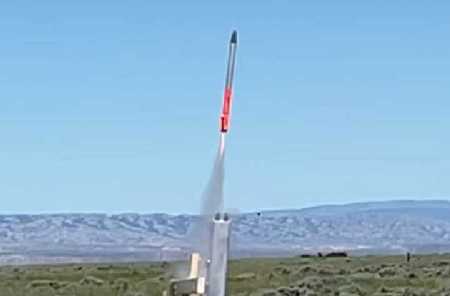
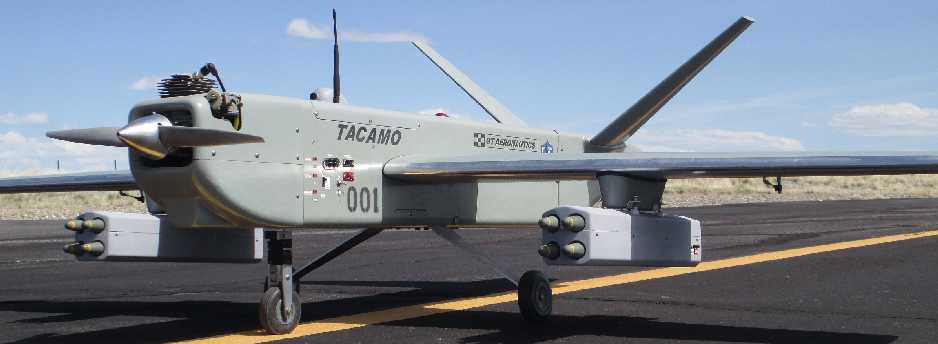
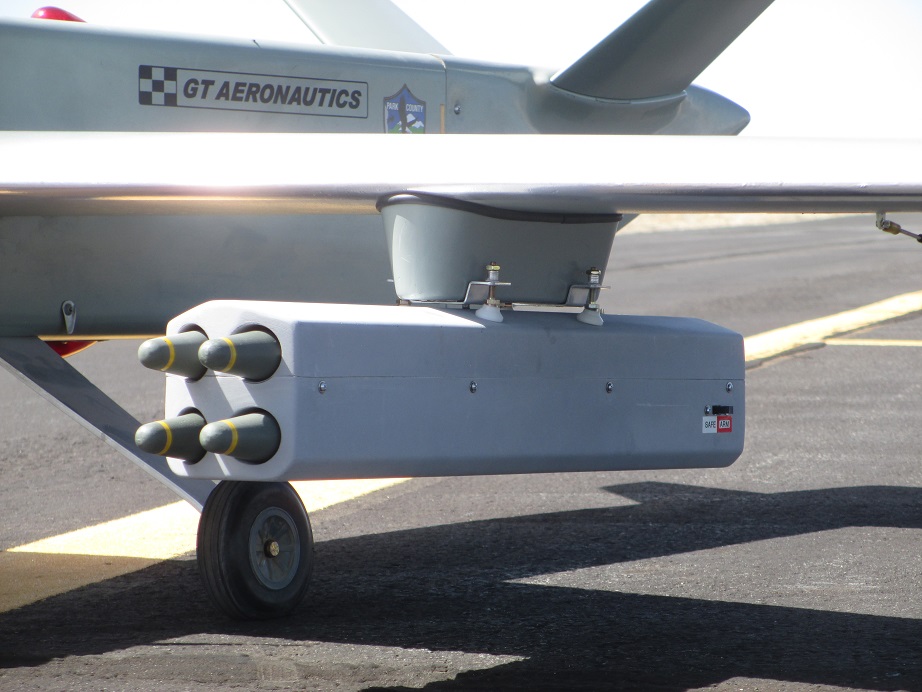
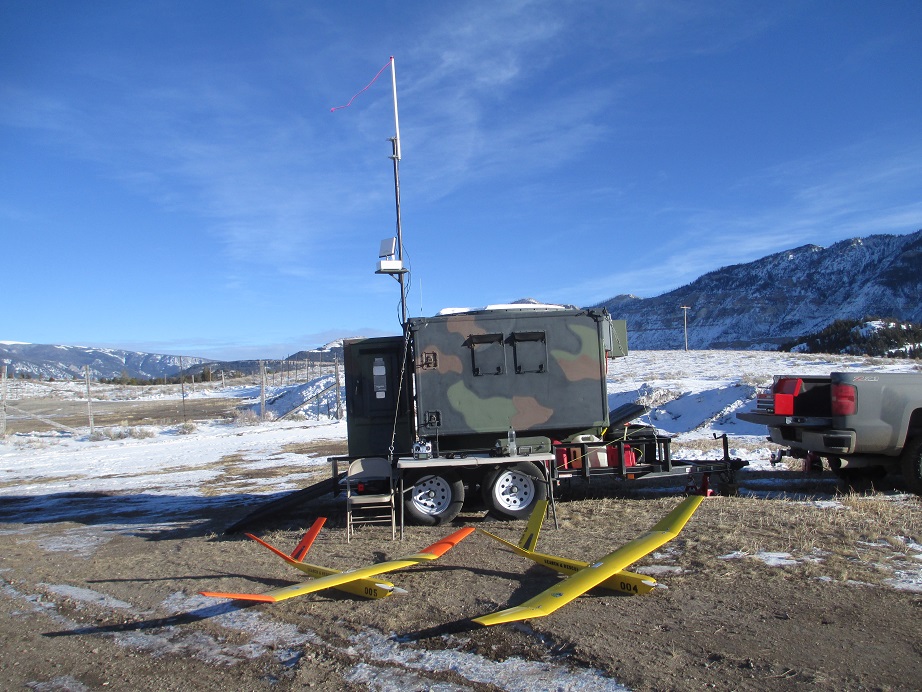
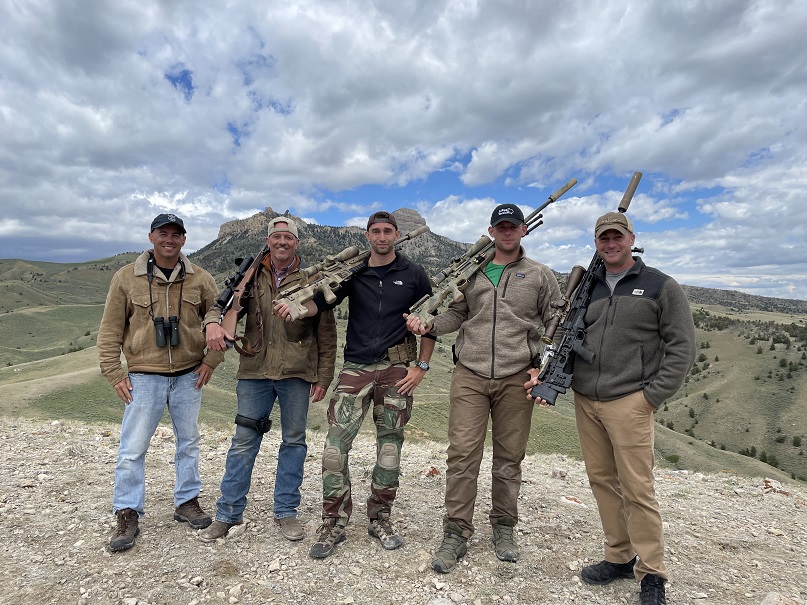
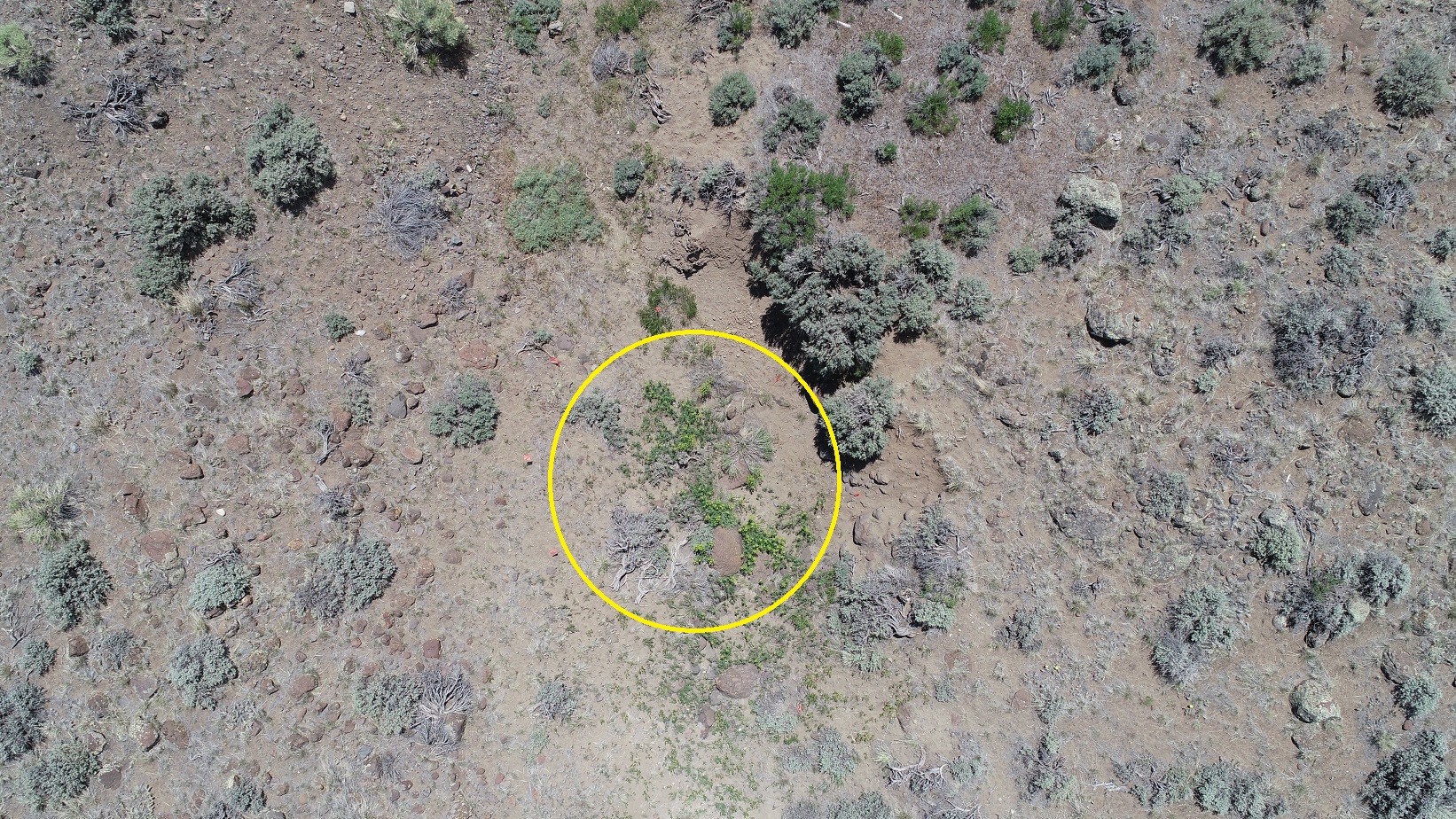

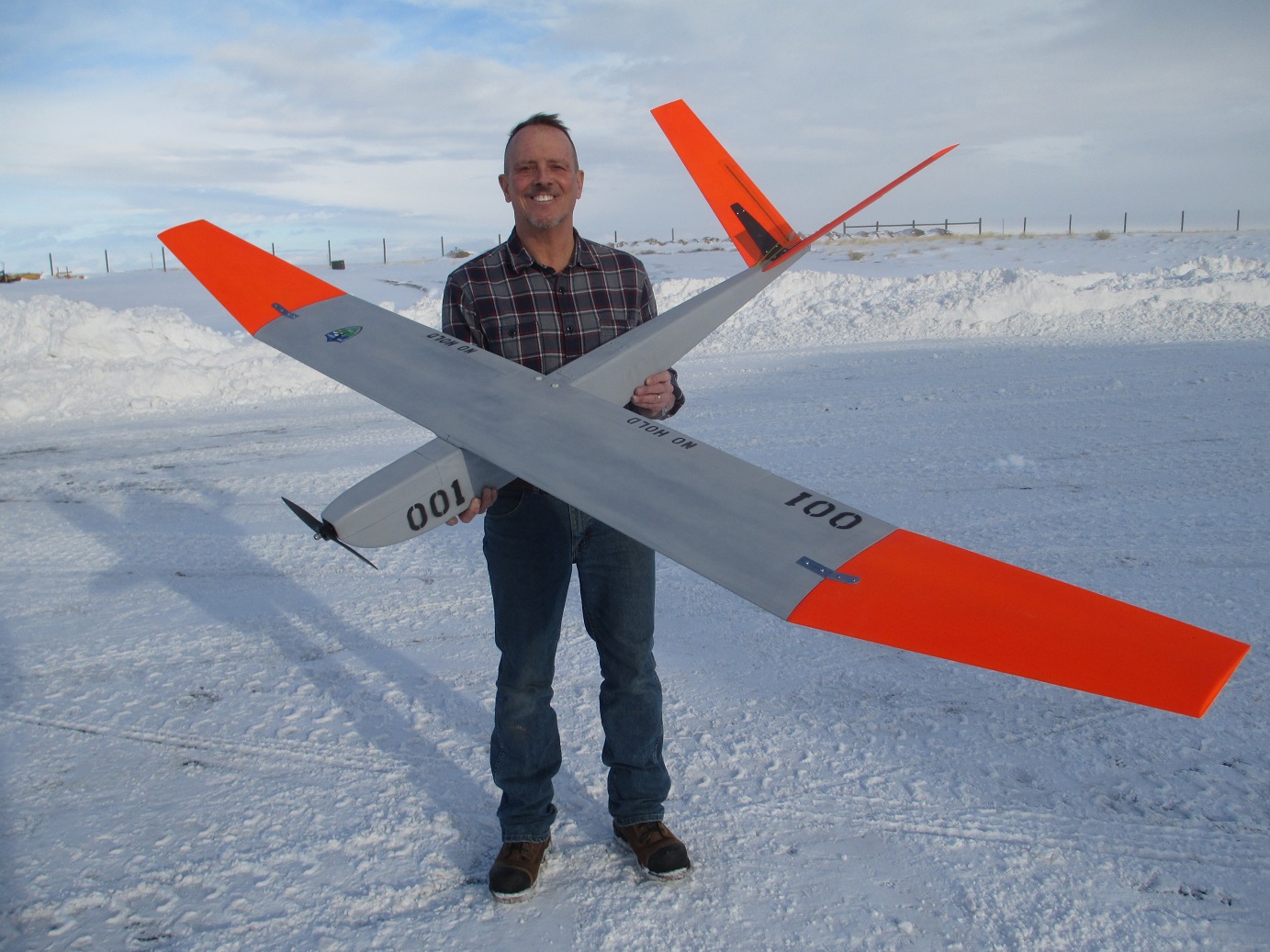
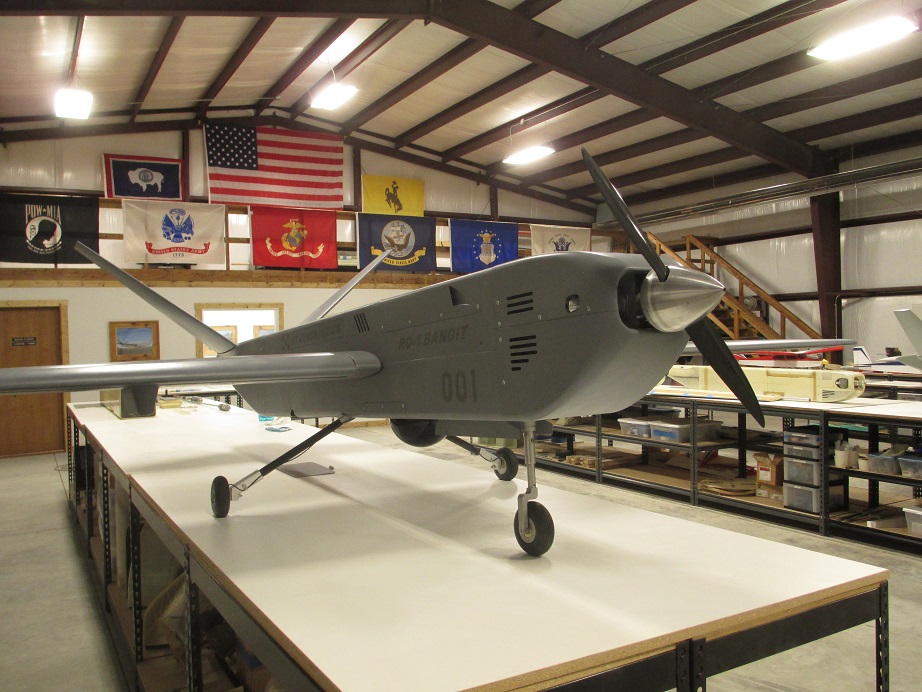

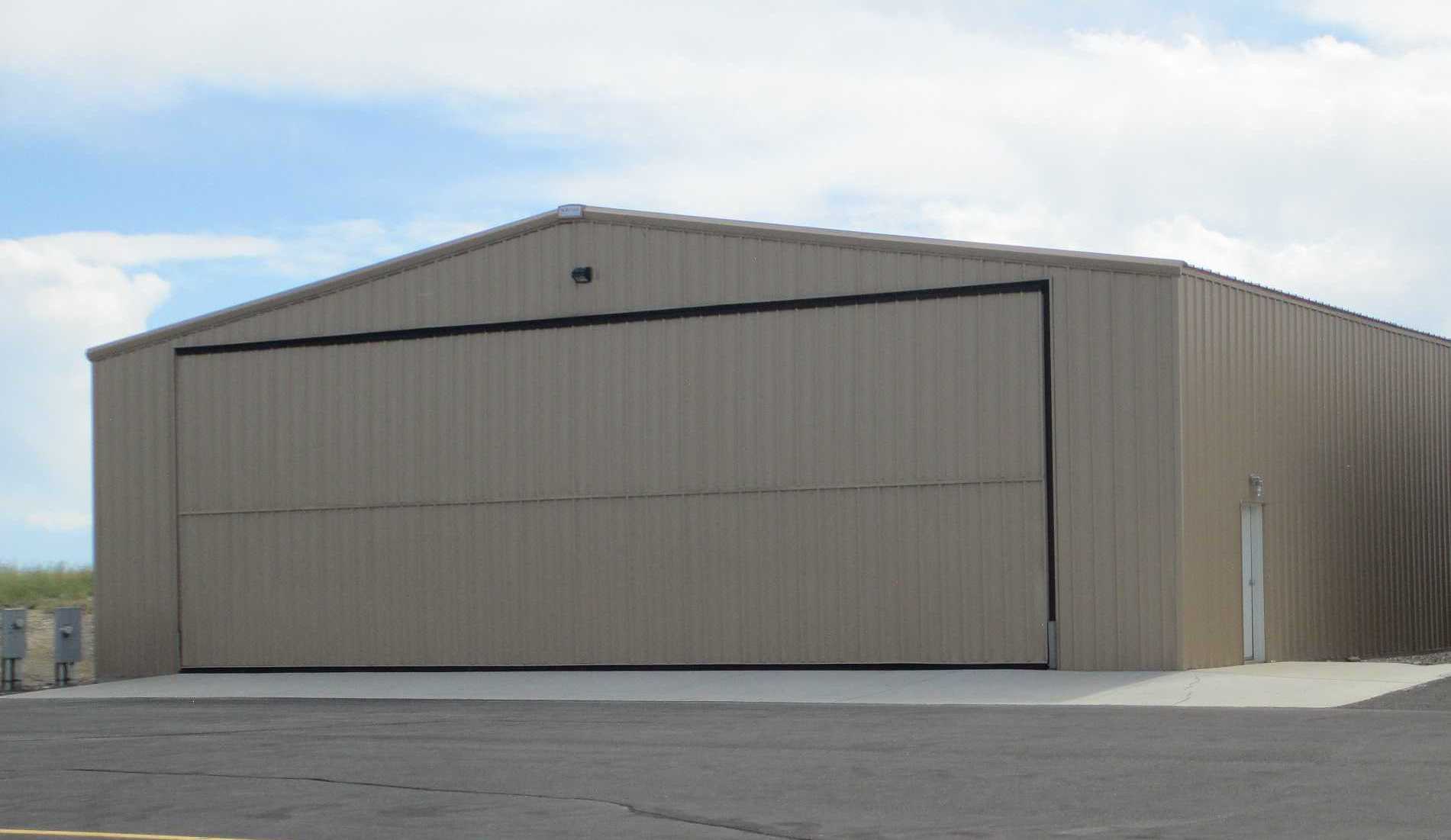

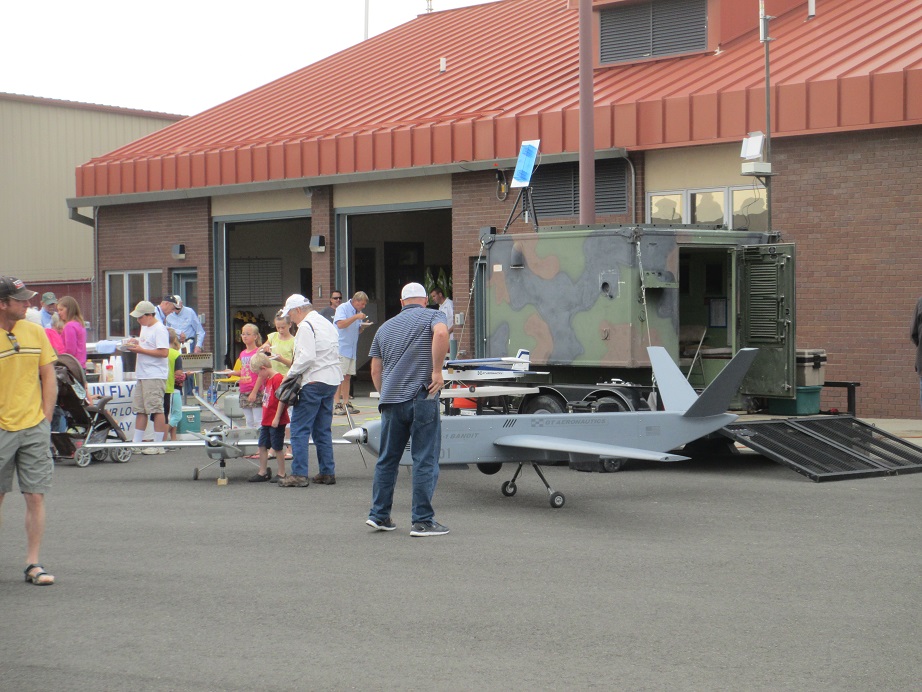
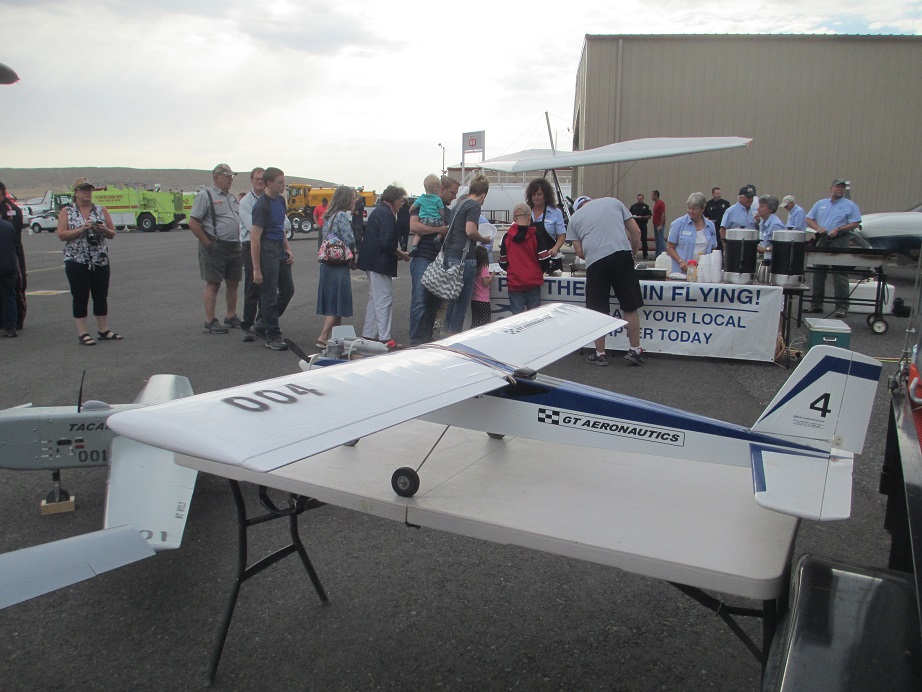

| GT AERONAUTICS, LLC, 26 Elk Road, Cody, WY 82414-7810, Phone & FAX: (307) 587-5221 |
©2025 GT AERONAUTICS, LLC